Portable locking bar for a cockpit-passenger door
A removable, single-piece locking mechanism that clamps into a recessed (indented) area on the door and against a second surface to hold a door between a passenger section and a control section closed. It is intended for vehicles such as aircraft where a cockpit or control area is separated from passengers; an operator or passenger installs the bar into the door recess to lock the door. The device relies on two planar extending arms connected by a curved planar connecting portion that bias the arms toward each other when engaged with the recess and the second surface.
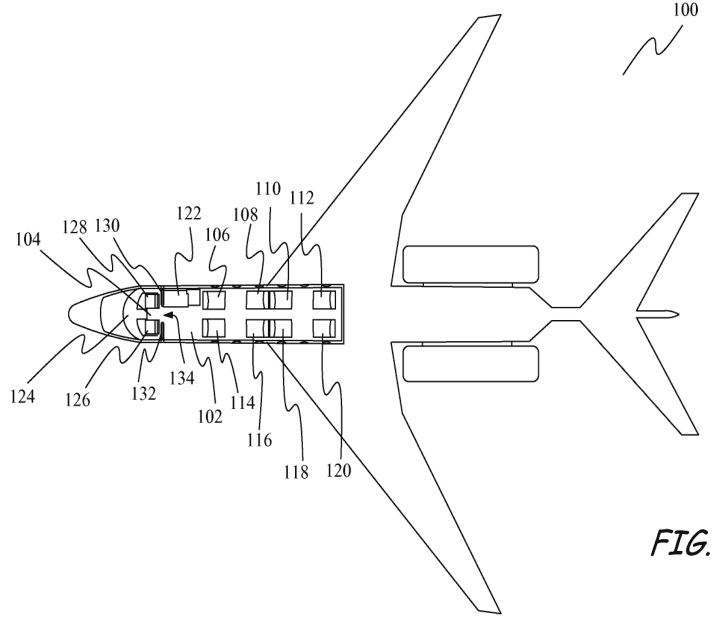
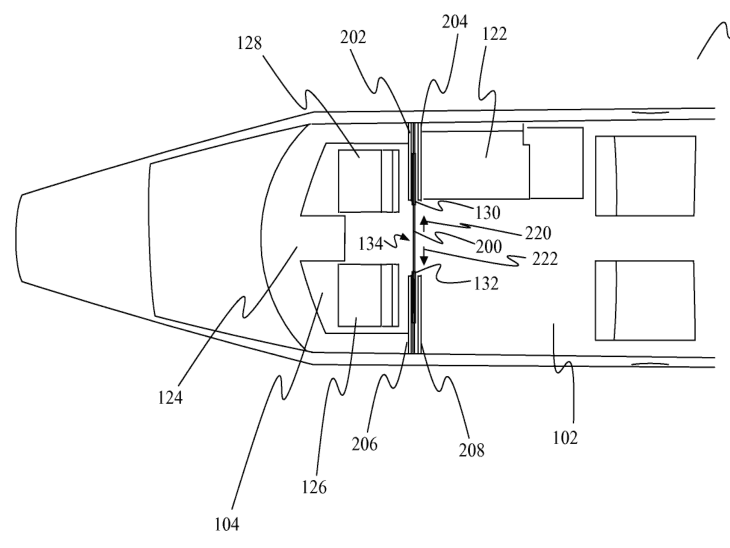
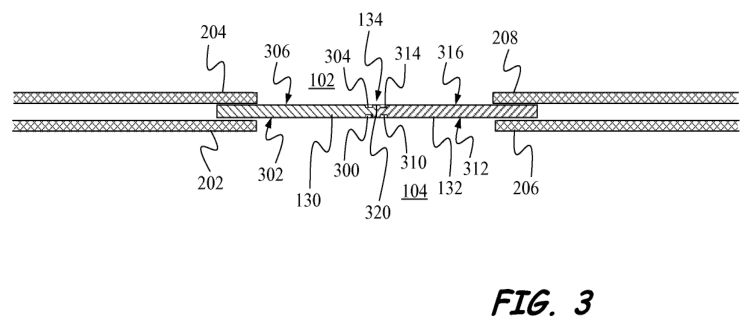
(57) What the patent covered
This write-up was generated by AI from the patent's text and may contain mistakes, so check it against the original patent before relying on it.
The main independent claim covers a vehicle having a door with an indented region and a separate second surface, together with a locking mechanism formed from a single planar piece that defines a first planar locking portion (arm), a second planar locking portion (arm) and a planar connecting portion; the mechanism locks the door when the first arm engages the recessed surface and the second arm engages the second surface, with the connecting portion configured to bias the arms toward each other when the first arm extends through the door plane and engages the indented surface and the second arm engages the second surface.
Distinguishing feature: A single-piece, planar curved connecting portion that creates a biasing clamp action so that both arms extend into an indented door region and press against a second surface to lock the door.
Novelty 3/5. The idea of a removable bar or clamp to hold a door closed was known; the claimed detail that the locking member is a single planar piece with a curved connecting portion that produces a specific geometry and biasing action was the new approach.
Manufacturing
Stamped or laser-cut sheet metal forming to create the planar arms and curved connecting portion; secondary forming/bending to set arm angles; optional bonded or riveted polymer friction pads; simple hand assembly and surface finish (plating or passivation).
Materials: Spring steel or stamped steel sheet, stainless steel sheet, aluminum alloy sheet, rubber or polymer friction pad (for arm surface).
Manufacturability 4/5. One stamped/form-cut sheet metal part with moderate forming, plus 1–2 small friction pad parts and bonding/riveting; tooling: die for stamping and press brakes for forming.
Market demand
No demand check has been run for this patent. Likely search terms: cockpit door lock bar, recessed door clamp for airplane, portable latch for cockpit door. The links in the sidebar open these searches.
Buyers: Aircraft operators, charter companies, private jet owners, flight crews.
Before manufacturing
No related continuation or divisional patents in force were found. Design patents, trademarks and unrelated patents may still cover the product.
Patent has lapsed; practical risks include certification or operator approval for cockpit access controls and crowded market for aftermarket door locks; claim language is specific to a recessed door surface and a planar single-piece locking member, which may limit applicability to non-recessed doors.
About 1.5% of lapsed patents are later revived by their owners. This page is a research lead, not legal advice. Obtain a freedom-to-operate opinion before manufacturing.