Place and blend 3D accessory assets onto a model surface
A method to attach a 3D asset (protrusion or hole) to a 3D model by aligning a pivot point to a contact point, projecting the asset base periphery onto the model surface, and deforming nearby asset geometry to create a smooth transition. Typical users are avatar, character-editing, or 3D-scene applications that let users add accessories or nested assets (for example, an eyeball in an eye-socket).
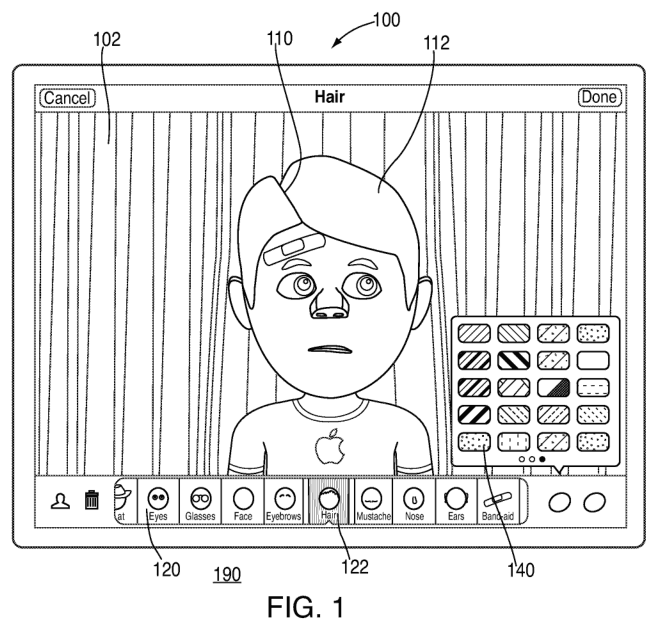
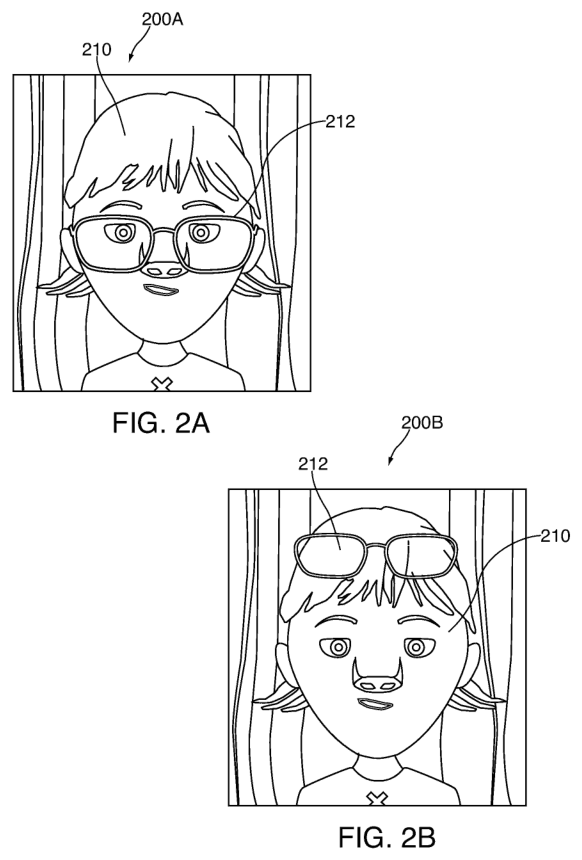
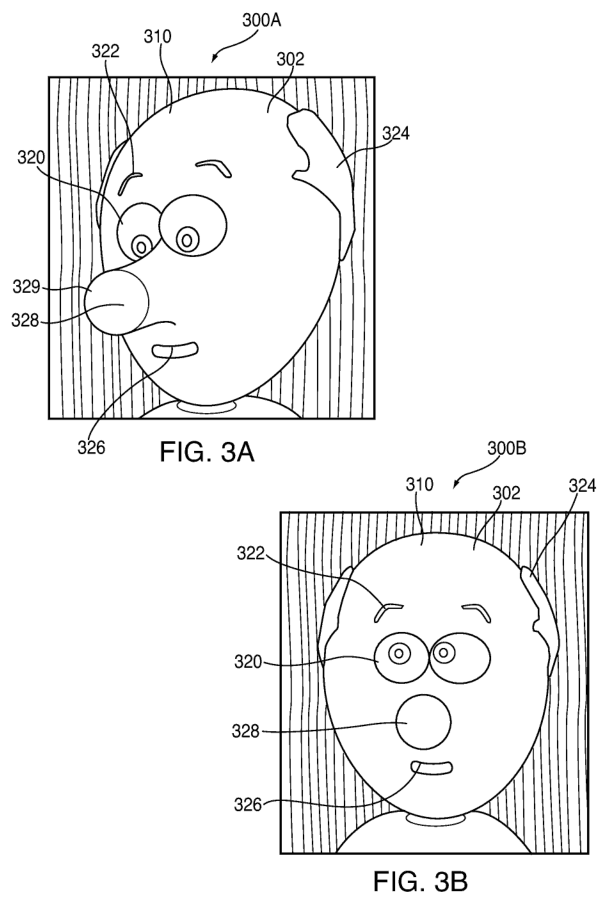
(57) What the patent covered
This write-up was generated by AI from the patent's text and may contain mistakes, so check it against the original patent before relying on it.
The independent claim required: displaying a 3D model; selecting a contact point on the model surface; identifying at least one plane tangent to the model at that contact point; positioning the asset so its pivot point coincides with the contact point and its base is initially enclosed in the model; projecting vertices defining the base periphery onto the model surface; and modifying the asset geometry near the base so the base region lies in the tangent plane and the transition between asset and model surface is smoothed.
Distinguishing feature: Projecting the asset base periphery onto the model surface and locally deforming the asset so its base region lies in a tangent plane and yields a smooth seam while the base begins enclosed within the model.
Novelty 3/5. The idea combines common operations-pivot alignment, surface projection and local mesh deformation-that were familiar for avatar editors and modeling tools, but packages them into a workflow for embedding accessory assets and nested assets with seam smoothing.
Implementation
A small team would import model and asset meshes into a scene graph, provide a UI to pick a contact point, compute the surface normal and tangent plane at that point, translate/rotate the asset so its pivot coincides with the contact point, raycast or closest-point project base-periphery vertices onto the model surface, then run a local deformation pass (vertex positions and normals blended over a falloff radius) to align the base region to the tangent plane and to smooth seams; for nested assets, create a cavity by subtracting the projected base region or marking a hole and place the secondary asset constrained by positional rules. Use existing libraries for mesh math (Eigen), collision/raycast (Bullet, Embree), and GPU-skinned deformation (GLSL/compute).
Components: 3D mesh model of base structure (avatar), 3D mesh assets with pivot point and base periphery, Collision/tangent-plane calculator (surface normals), Local mesh deformation routine (vertex projection, blend/skin/vertex displacement).
Buildability 5/5. The main engineering work is mesh projection and localized deformation with a user-friendly falloff; no special data or hardware is required.
Market demand
No demand check has been run for this patent. Likely search terms: embed accessory on 3D model, project mesh base onto surface, mesh seam smoothing for avatars. The links in the sidebar open these searches.
Buyers: Game studios, avatar/emoji platforms, 3D content creation apps.
Before manufacturing
No related continuation or divisional patents in force were found. Design patents, trademarks and unrelated patents may still cover the product.
Patent lapsed; practical issues include handling topology mismatches, texture/UV seams, and real-time performance for high-vertex-count meshes.
About 1.5% of lapsed patents are later revived by their owners. This page is a research lead, not legal advice. Obtain a freedom-to-operate opinion before manufacturing.