Collapsible trash can with tiered sidewall bag engagements
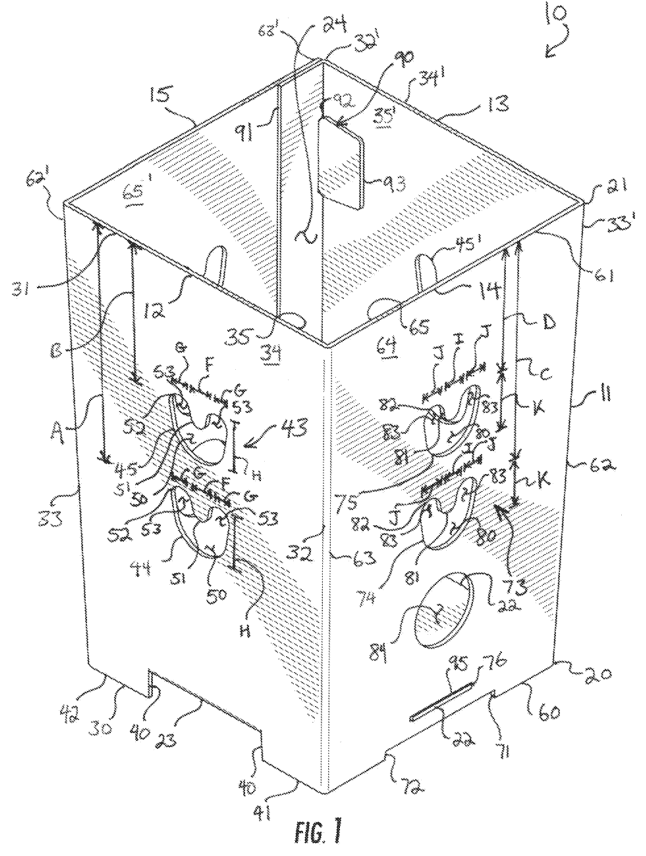
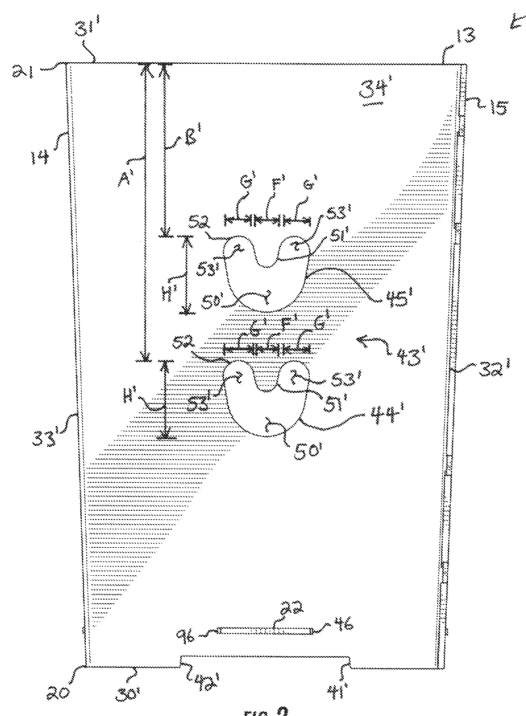
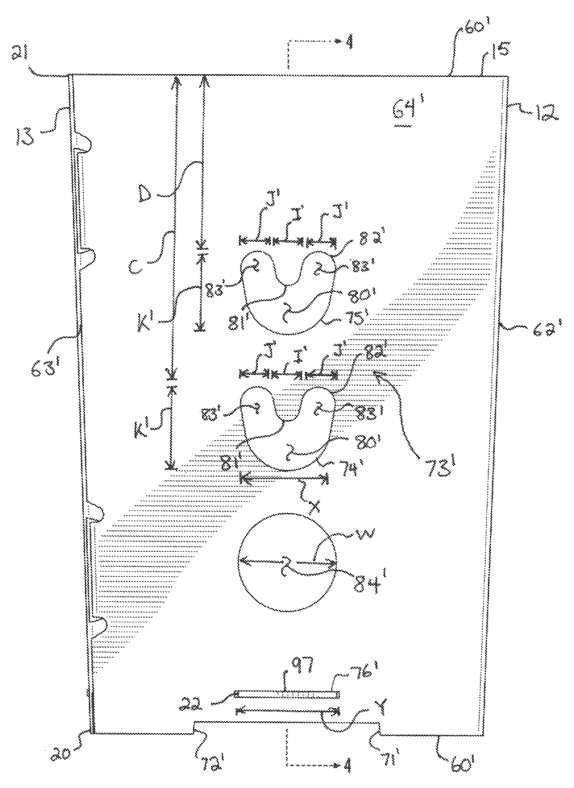
A rectangular collapsible trash receptacle with a base panel and four side panels that include tiered rows of engagements. Rigid fingers project downward into holes in the sidewall so that multiple thin plastic bags can be nested and retained at staggered vertical positions; a port below the engagements allows bag access or discharge. Intended for household or commercial users who store or reuse grocery/produce bags.
(57) What the patent covered
This write-up was generated by AI from the patent's text and may contain mistakes, so check it against the original patent before relying on it.
The main independent claim covered a receptacle whose sidewall has first and second sets of opposed side panels with corresponding retention assemblies of multiple engagements, where the first retention assembly is vertically offset from the second, and a port is formed through the sidewall below the retention assemblies. Each engagement comprises a hole and a rigid finger projecting downwardly into the hole (from the description).
Distinguishing feature: Tiered, vertically offset retention assemblies of multiple engagements formed through opposing side panels to hold nested bags at different heights.
Novelty 3/5. Tiered bag-retention on a collapsible trash can was a specific improvement on common bag-holding rims and single-level tabs already used in household bins.
Manufacturing
Likely thermoformed or injection-molded sidewall panels with molded holes and integral or separately molded downward-projecting rigid fingers, a stamped or molded base panel, and hand or robotic assembly to join panels and fold hinge areas.
Materials: Sheet plastic (polypropylene or polyethylene), stamped or molded rigid plastic fingers (polycarbonate or nylon), hinge or fold lines in the sidewall (integral molded thin sections), optional metal or plastic base panel reinforcement.
Manufacturability 4/5. Multiple molded panels with tiered cutouts and small rigid fingers; requires tooling for molds and modest secondary assembly for base attachment and folding for storage.
Market demand
Comparable products are on sale; this exact design was not found. Typical retail price: $20–$29. Two recognizable US-based listings: one patented bag-organizing insert for standard bins (BagSaver+), and a collapsible/flattening trash can (Exploding Garbage Can) with user reviews (Rack-A-Tiers listing shows 8 reviews).
- BagSaver+ · Bagsaver.net$19.99
- The Exploding Garbage Can · Rack-A-Tiers$28.99
Demand check by web search, week of Oct 12, 2026. Listings change frequently.
Buyers: Household shoppers who save grocery bags.
Sourcing
Factories list this type of product on supplier marketplaces, at about $1.00–$1000.00 per unit. Factory cost is roughly 3–5003% of the typical retail price, before shipping, duties and marketplace fees. All listings show foldable/collapsible bag holders with external frames designed to hold or dispense bags; customization options (logo, packaging) are typically available via the supplier or factory.
- Guangzhou Shuangtao Mesh Manufacture Co., Ltd. · Alibaba.com · MOQ 50 pieces$1.70
- JH-Mech Enterprises Inc. · Alibaba.com · MOQ 300 pieces$38.50
- Rul-M Group / Made-in-China listing alternative · Made-in-China.com · MOQ 1 piece$1.30
Supplier prices are from public listings found by web search, quoted before customization, shipping and duties. Use them to decide whether to request a quotation.
Before manufacturing
No related continuation or divisional patents in force were found. Design patents, trademarks and unrelated patents may still cover the product.
Patent has lapsed; practical issues include thin plastic fingers that can break with repeated use, crowded market for bag-storage bins, and the specification is somewhat vague about exact finger geometry and hinge construction.
About 1.5% of lapsed patents are later revived by their owners. This page is a research lead, not legal advice. Obtain a freedom-to-operate opinion before manufacturing.