Interleaving compressed-rail solar module mount
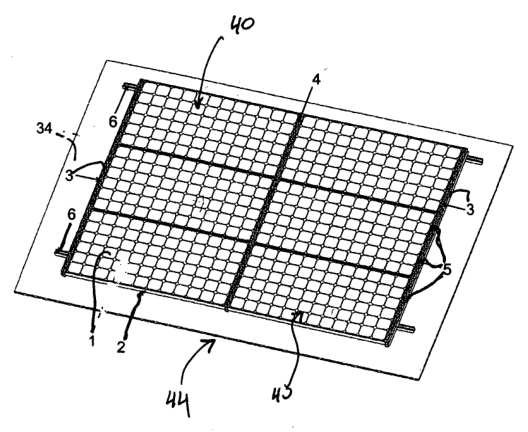
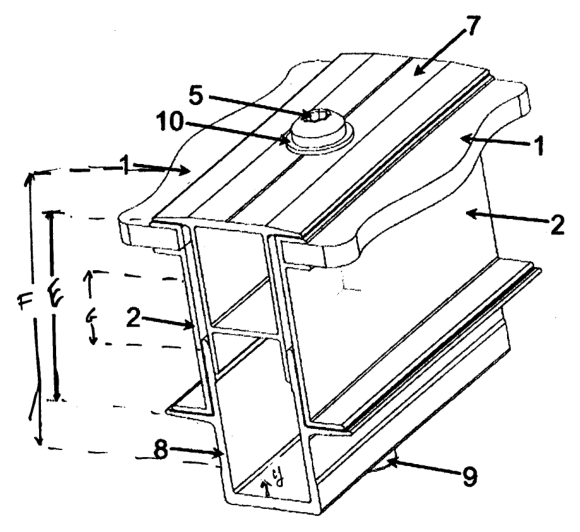
A rail-based mounting assembly that holds framed solar modules between an upper rail and a lower rail whose flange members interleave and are axially compressed to clamp module ends. Installers place module ends on the lower support structure, interleave the upper rail flanges into the lower rail, then tighten a vertical compression mechanism to compress the rails and retain the modules. The product is aimed at solar installers and racking manufacturers for rooftop and ground-mount arrays.

(57) What the patent covered
This write-up was generated by AI from the patent's text and may contain mistakes, so check it against the original patent before relying on it.
The main independent claim covered an assembly with paired upper and lower rails in which at least one upper flange or lower flange is disposed within and adjacent to the other so the rails interleave to provide an adjustable spacing between upper and lower support structures to receive a module end, and a multi-component compression mechanism that extends vertically through the upper support and lower rail base and is adjustable to axially compress the interleaved rails to grasp the module end.
Distinguishing feature: Using interleaved upper and lower rails combined with a compression mechanism that passes axially through the rail stack to clamp module ends and provide adjustable spacing.
Novelty 3/5. Framed PV modules and rail mounts were common; the patent’s addition was an interleaving rail pair clamped by a vertical compression member rather than fixed spaced rails or separate clamps.
Manufacturing
Likely made with aluminum extrusion for upper and lower rails, stamping or machining of rail features, drilling or tapping for compression hardware, standard fasteners (bolts/nuts) and on-site assembly by installers.
Materials: Extruded aluminum (rails and flanges), Stainless steel fasteners (compression components), Rubber or EPDM pads or gaskets (likely between rails and module edge), Galvanized or coated steel base plates (possible substructure).
Manufacturability 4/5. Requires several extruded rail parts plus metal fasteners and simple machining; items sourced from extrusion and hardware suppliers and assembled on-site by installers.
Market demand
No demand check has been run for this patent. Likely search terms: interlocking solar rail clamp, compressible PV module rail, rail mount solar panel clamp. The links in the sidebar open these searches.
Buyers: Solar installers, rooftop racking contractors, small racking OEMs.
Before manufacturing
No related continuation or divisional patents in force were found. Design patents, trademarks and unrelated patents may still cover the product.
Patent is lapsed; practical issues include sealing to prevent water ingress, wind uplift certification, structural load ratings, and a crowded market with many established rail-clamp designs.
This patent has reached the end of its full term and cannot be revived. This page is a research lead, not legal advice. Obtain a freedom-to-operate opinion before manufacturing.