Dialog system that fills missing intent parameters by asking follow-ups
A speech dialog processor receives an audible utterance, maps it to a user intent using an ontology, extracts parameters associated with that intent, and checks which required parameters are missing. If parameters are missing it generates audible prompts requesting them; if all are present it generates the requested response; if intent cannot be determined it reports non-understanding. Target users are voice-driven customer service or mobile assistants.
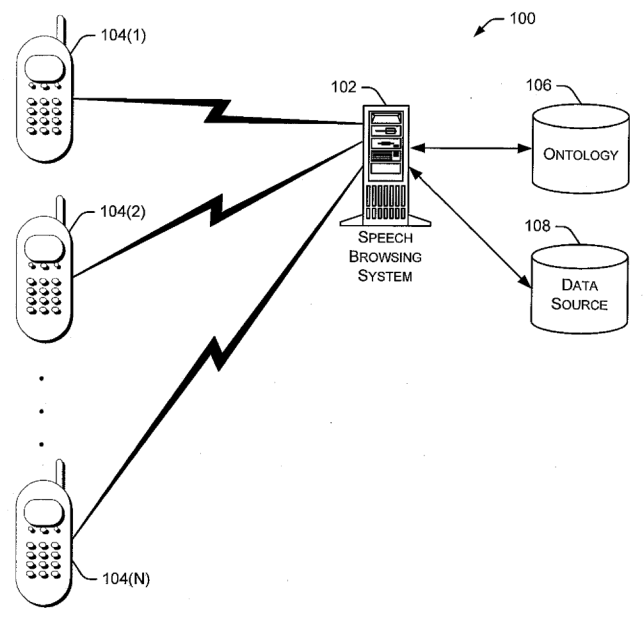
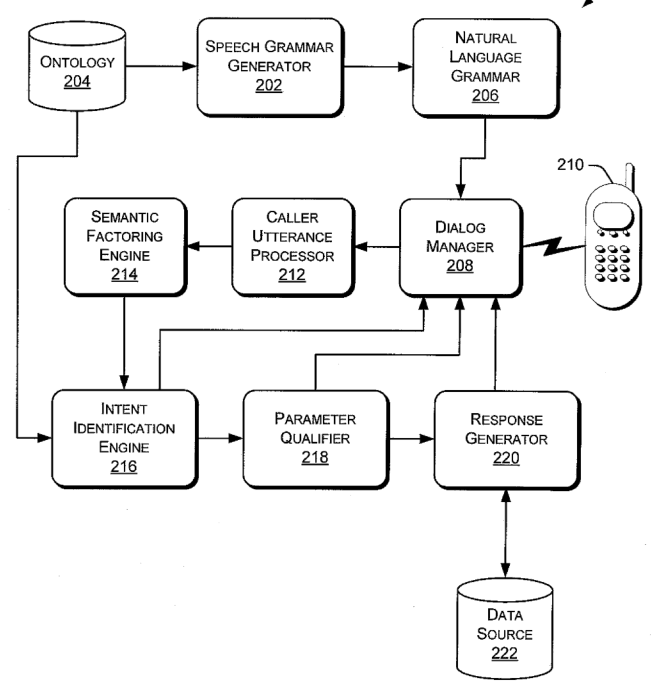
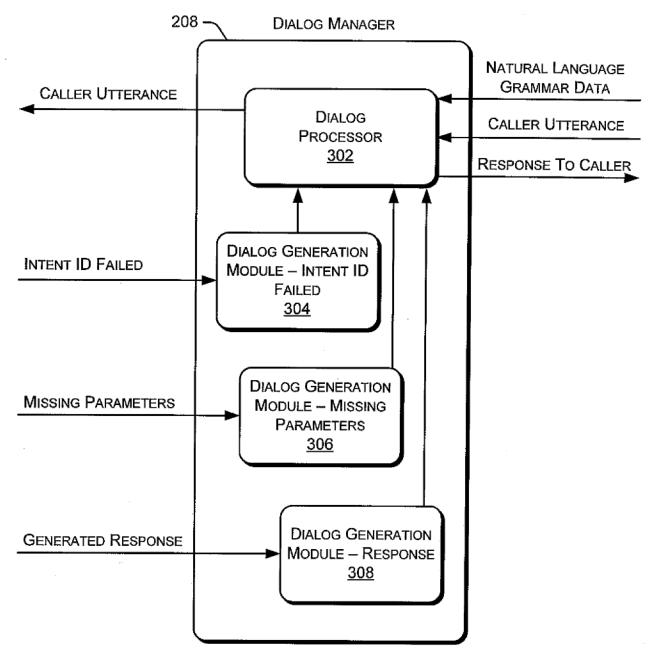
(57) What the patent covered
This write-up was generated by AI from the patent's text and may contain mistakes, so check it against the original patent before relying on it.
The independent claim requires: receiving an audible utterance at a dialog processor; determining a user intent using an ontology that lists words and their relationships; identifying parameters tied to that intent; checking whether any required parameters are missing from the utterance; if any are missing, generating an audible request for those parameters; and if none are missing, generating a response to the user's request.
Distinguishing feature: Using an ontology-based intent model that defines word relationships and associated parameter slots, then conditionally prompting only for missing parameters.
Novelty 3/5. At filing (2005–2007) intent/slot-based dialog systems existed, but the claim emphasized an ontology with explicit word relationships plus conditional prompting rather than fixed tree navigation.
Implementation
A small team would use an off-the-shelf ASR (Kaldi/DeepSpeech/Cloud ASR), create an intent ontology as JSON/YAML mapping intents to required/optional slots and word relationships, implement a dialog manager that fills slots from ASR/NLU output and issues TTS prompts for missing slots, and connect to back-end actions via REST. Use simple NLU (rule-based or a lightweight classifier plus entity extraction) and TTS from a cloud provider for MVP.
Components: ASR (speech recognizer), Ontology/intent-slot model (lexicon and relationship graph), Dialog manager implementing slot filling and prompt policy, TTS (text-to-speech) or prompt playback.
Buildability 5/5. Main work is building and curating the ontology/slot definitions and the NLU extractor; integration with ASR/TTS and REST actions is routine.
Market demand
No demand check has been run for this patent. Likely search terms: slot-filling dialog system, ontology-driven NLU, interactive voice assistant. The links in the sidebar open these searches.
Buyers: Enterprises running phone-based customer service or mobile voice assistants.
Before manufacturing
No related continuation or divisional patents in force were found. Design patents, trademarks and unrelated patents may still cover the product.
Patent has lapsed; practical risks are quality of ASR/NLU, ontology curation effort, and crowded space with existing open-source and cloud dialog/NLU platforms.
This patent has reached the end of its full term and cannot be revived. This page is a research lead, not legal advice. Obtain a freedom-to-operate opinion before manufacturing.