A cup holder whose rim tightens as a cup is pushed in
A vehicle or aircraft cup holder with an aperture made of movable members and a spring or pushable base; when you press a cup down onto the base the base moves away and cam surfaces force the aperture members inward so the opening contracts around the cup. It’s aimed at seating applications where fixed-size holders either let narrow cups wobble or won’t accept larger cups.
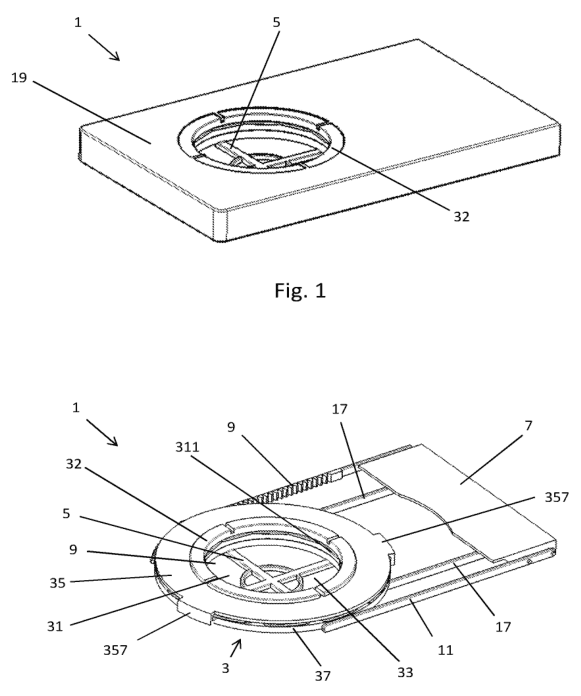
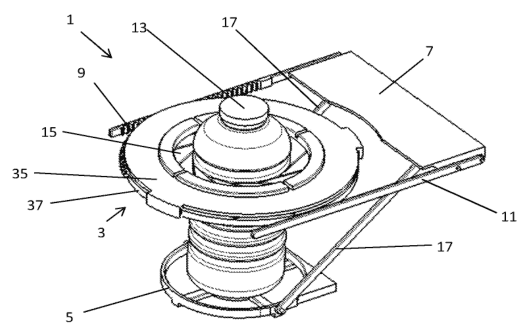
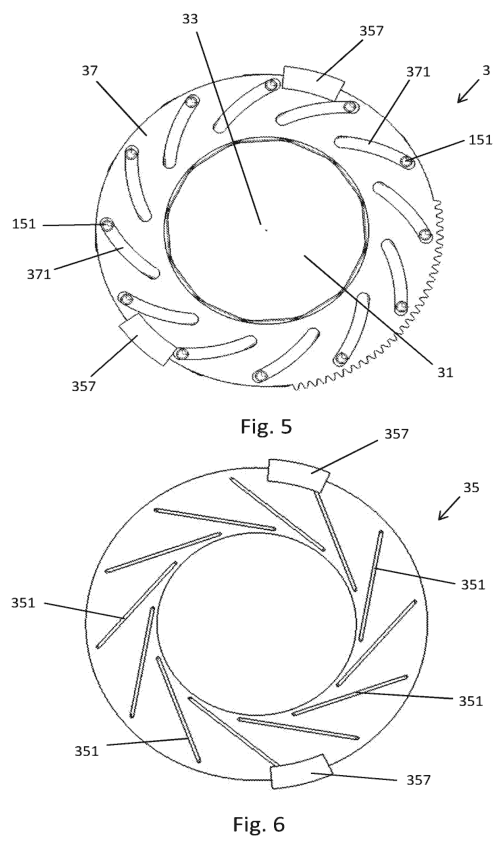
(57) What the patent covered
The main independent claim covers a two-part holder with a holding portion that defines an aperture formed by one or more movable members and a base portion that a cup sits on; when the cup pushes the base away, a cam plate on the holding portion engages the members and drives them into a channel, reducing the aperture size around the cup. The claim requires the cam plate, the channel, movable members that define the aperture, and the base that is pushed away to trigger the cam action.
The distinctive part: A cam plate that actively forces the aperture members inward as the base is depressed, so the opening shrinks in response to the cup being pushed through.
Novelty 3/5. This is a clever improvement on common adjustable cup holders (spring bases, flexible fingers); the novelty is the specific cam-driven interaction between a pushable base and inward-moving aperture members rather than just springs or compliant fingers alone.
Making it
Injection-molded plastic body for holding portion and base, stamped/bent metal or molded plastic cam plate and fingers, assembled with springs or snap-fit flexures and possibly adhesive or screws for sub-assemblies; hand or automated insertion of small springs or grip pads.
Materials: injection-molded thermoplastic (e.g., ABS or polypropylene), stainless or spring steel for cam/retaining inserts (likely), rubber or TPE pads for grip, small coil springs or elastomeric flexures (likely)
Manufacturability 4/5. Several molded parts with simple moving members and low-cost metal or molded cams; needs some assembly of springs or snap-fit components but tooling is standard for automotive interiors.
Is anyone buying?
We haven't run a demand check on this one yet. Shoppers would likely search for adjustable cup holder cam base, push-down cup holder tightens around cup, vehicle cup holder adjustable aperture; the links on the right open those searches.
Who buys it: vehicle and aircraft seat OEMs, fleet upfitters, aftermarket car accessory suppliers
Before you make it
We didn't find any related continuation or divisional patents still in force, although that doesn't rule out design patents, trademarks or unrelated patents covering the same product.
Practical issues include dirt and sticky liquids jamming the cam mechanism, durability of small springs or flexures under repeated use, and meeting automotive/aircraft flammability and vibration requirements.
Owners occasionally revive lapsed patents (about 1.5% are), and this page is a research lead rather than legal advice, so get a freedom-to-operate opinion before you manufacture anything.