Asynchronous ad selection and personalization for downloaded media
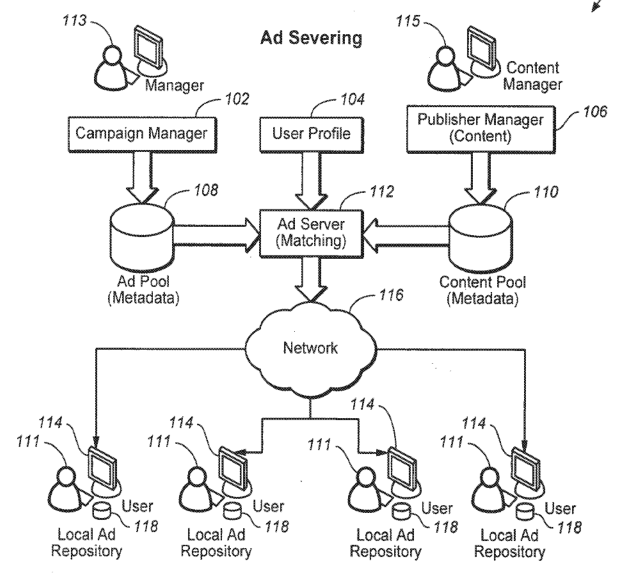
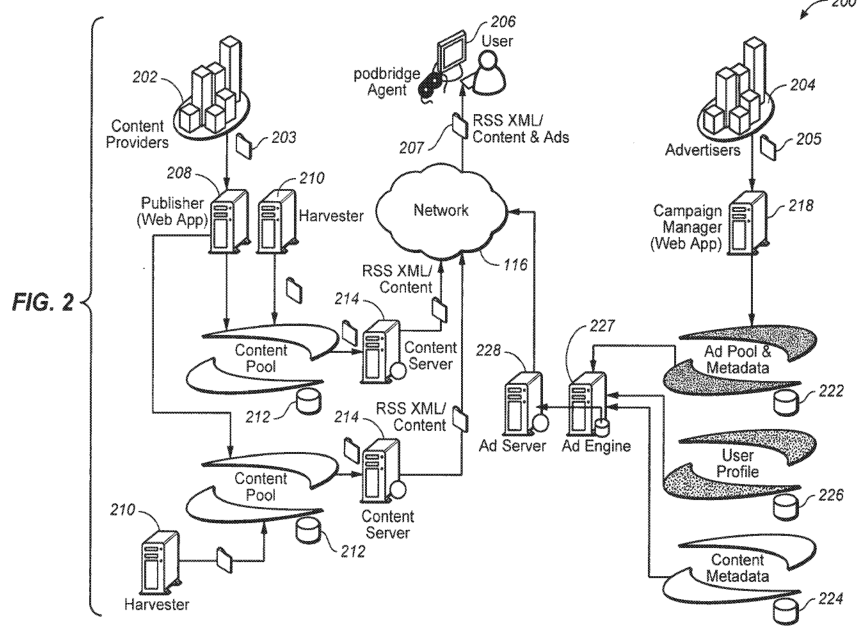
System for selecting, filtering and personalizing media ads for podcast-style content by using metadata and a periodically updated user profile. An ad server receives feed or content metadata and ad-campaign criteria, applies user acceptability rules, produces a personalized set of ad files and stores them on the user device for asynchronous insertion into subscribed media. Target users are publishers, podcast platforms and ad servers serving downloaded or cached media to end-user devices.
(57) What the patent covered
This write-up was generated by AI from the patent's text and may contain mistakes, so check it against the original patent before relying on it.
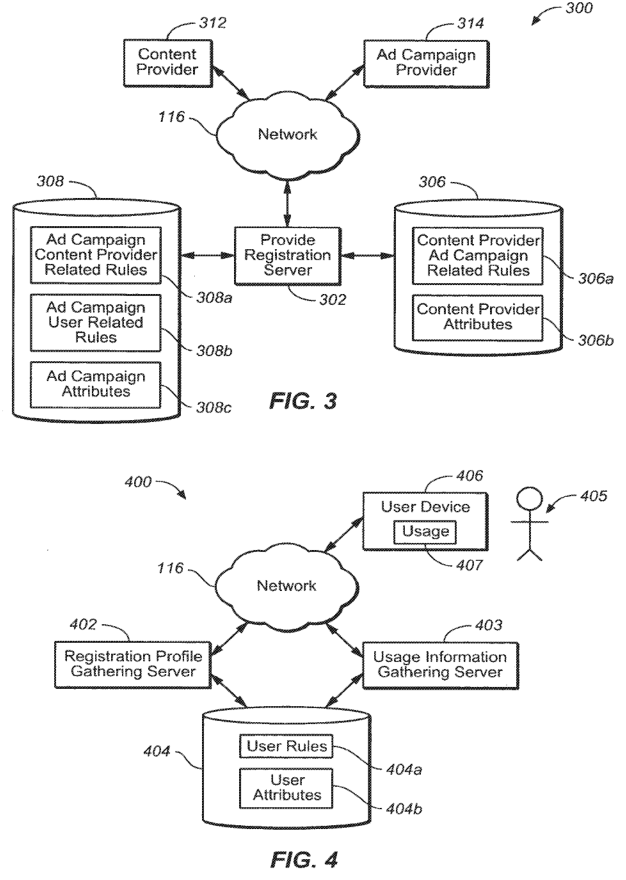
The main independent claim covers an ad server that receives metadata for media content files and ad-based criteria linking ad campaigns to those files, uses a periodically updated user profile containing acceptability rules to filter campaigns, personalizes ad files based on media-file characteristics and ad criteria, and stores the personalized ad set on the user device for later inclusion in the media content.
Distinguishing feature: Associating ad campaigns with media files via their metadata and using a periodically refreshed user profile with acceptability rules to filter and pre-store personalized ad files on the user device for asynchronous insertion.
Novelty 3/5. When filed (mid 2000s), podcast feeds and local caching were common; the patent combined per-file metadata-based campaign association and client-side stored personalized ads, which was a practical improvement on standard server-side ad insertion.
Implementation
Build an ad server that parses feed metadata (RSS/Atom/enclosures), stores ad-campaign criteria linking campaign IDs to feed or item metadata, and exposes an API the client subscribes to; implement a client-side agent that syncs periodically to pull a user profile and a filtered set of pre-personalized ad files (audio/video) and stores them locally; at playback time, have the player read media-item metadata, request a matching ad file from local storage and insert it into the media timeline. Use standard web servers, JSON APIs, OAuth for user profile access and S3 or CDN for ad media hosting.
Components: Ad server (application), content servers / RSS/Atom feeds with metadata, user device local storage and playback client, user profile store (server-side), communication network (HTTP/HTTPS).
Buildability 5/5. Main work is engineering integration: feed parsing, campaign matching logic and client sync; no special hardware or exotic data required.
Market demand
No demand check has been run for this patent. Likely search terms: podcast ad insertion preloaded ads, client-side personalized audio ads, metadata-based ad campaign matching. The links in the sidebar open these searches.
Buyers: Podcast platforms, mobile media players, ad networks serving downloaded media.
Before manufacturing
This patent has 2 related US patents (continuation, divisional or parent) that may remain in force: US 9,367,862, US 8,676,900. Review their claims before proceeding.
Patent lapsed; practical risks are implementation complexity (sync, storage limits, DRM), privacy/compliance for user profiles, and crowded market with existing ad-insertion SDKs and standards.
This patent's full term ends on Oct 25, 2026. A patent that has run its full term cannot be revived. This page is a research lead, not legal advice. Obtain a freedom-to-operate opinion before manufacturing.