Evacuated reflective chamber with internal hollow disc heat sink
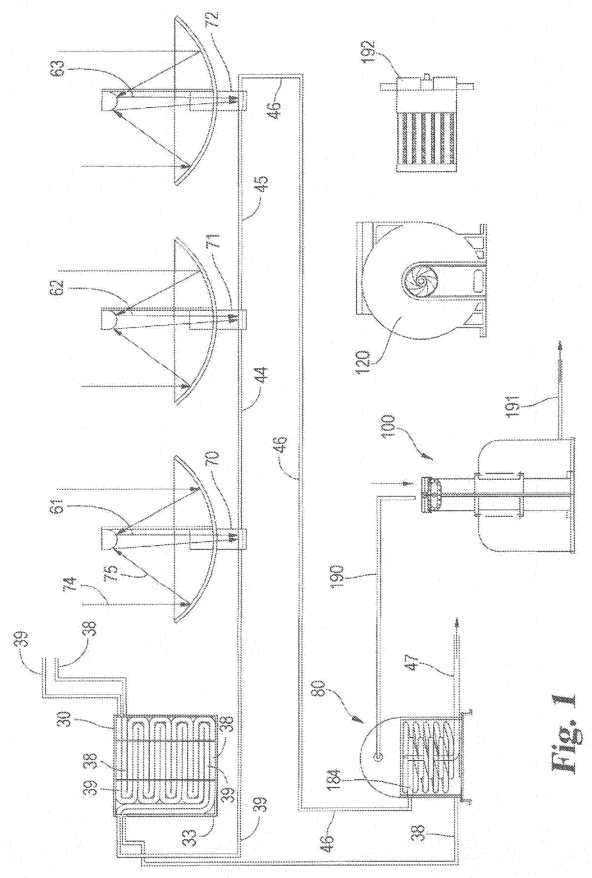
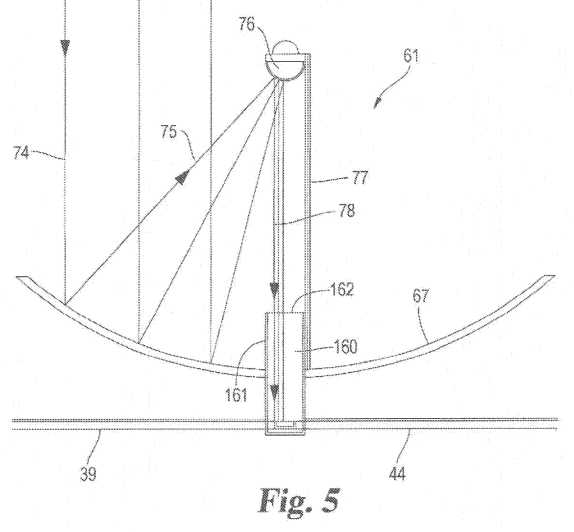
A hollow, evacuated concentrator mounted to a parabolic reflective dish that directs sunlight into an interior chamber toward a disc-shaped hollow heat sink. The heat sink has inlet and outlet ports and internal spaced fins that form a maze of passages to force fluid flow and increase heat transfer; the chamber walls have inward reflective surfaces and the chamber extends below the heat sink to form a partial vacuum space. Intended users are solar system integrators and installers of dish-based solar thermal collectors.
(57) What the patent covered
This write-up was generated by AI from the patent's text and may contain mistakes, so check it against the original patent before relying on it.
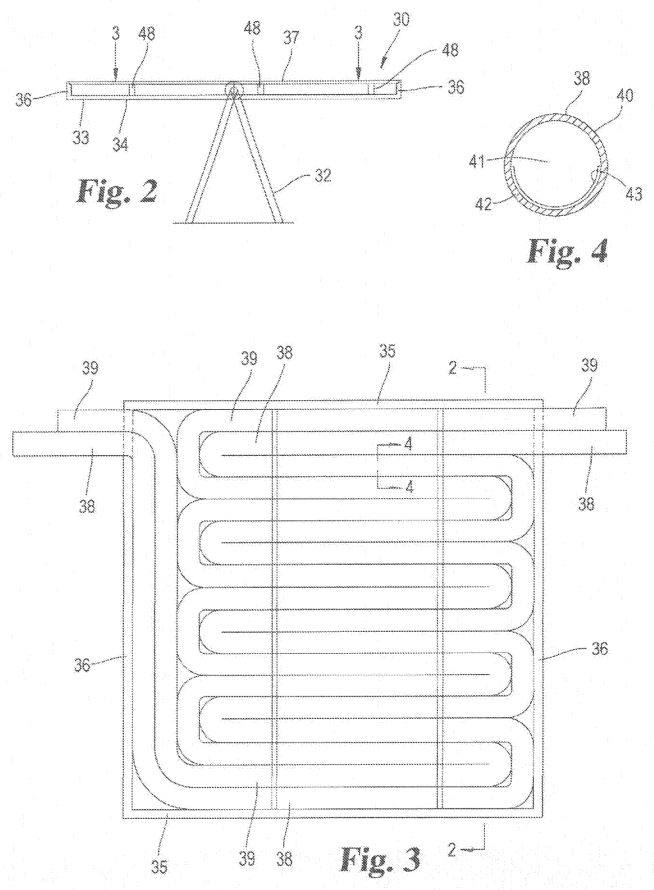
The main independent claim required a hollow evacuated body with top, bottom and side walls and an airtight cap, an internal disc-shaped hollow heat sink having opposite side walls with an inlet port in one side and an outlet port in the other, and spaced-apart internal fins that create an intricate network of passages to partially occlude free fluid flow through the heat sink.
Distinguishing feature: A disc-shaped hollow heat sink with internal fin-created maze passages combined with an evacuated chamber whose sidewalls have inward reflective surfaces and extend below the heat sink to create a partial vacuum space.
Novelty 3/5. Parabolic dishes with absorbers and HTF tubes were already common; the patent combined an evacuated reflective chamber and a maze-like hollow disc heat sink to improve in-chamber heat concentration and forced tortuous flow.
Manufacturing
Likely fabricated by forming a metal or composite hollow body, applying reflective coating to selected interior sidewall sections, manufacturing a disc-shaped heat sink by brazing or welding stamped/formed fins into a hollow shell, drilling/boring inlet and outlet ports, assembling the heat sink into the chamber, fitting an airtight glass cap and sealing the assembly under vacuum; final mounting features added for attachment to a reflective dish.
Materials: Low-iron glass or transparent glazing for the airtight cap (likely borosilicate or tempered glass), Metallic reflective coating or polished metal for inward-reflective sidewall surfaces (aluminum or silvered surface), Metal heat sink (copper, aluminum, or stainless steel) with internal fins, Seals and gaskets (elastomer O-rings or metallic vacuum seals).
Manufacturability 4/5. Several formed and coated parts (body, reflective interior, disc heat sink with internal fins, glass cap) require medium-level tooling and brazing/welding; assembly requires vacuum pumping and sealing but uses conventional sheet forming and brazing techniques.
Market demand
No demand check has been run for this patent. Likely search terms: solar dish heat sink chamber, evacuated solar concentrator, parabolic dish receiver unit. The links in the sidebar open these searches.
Buyers: Solar thermal system integrators and dish-based collector installers.
Before manufacturing
No related continuation or divisional patents in force were found. Design patents, trademarks and unrelated patents may still cover the product.
Patent has lapsed; practical issues include vacuum sealing reliability, materials compatible with high temperatures and cycling, certification for pressure/vacuum and plumbing connections, and crowded market for solar receivers.
About 1.5% of lapsed patents are later revived by their owners. This page is a research lead, not legal advice. Obtain a freedom-to-operate opinion before manufacturing.