Omnidirectional pinion wheel for sideways and vertical travel
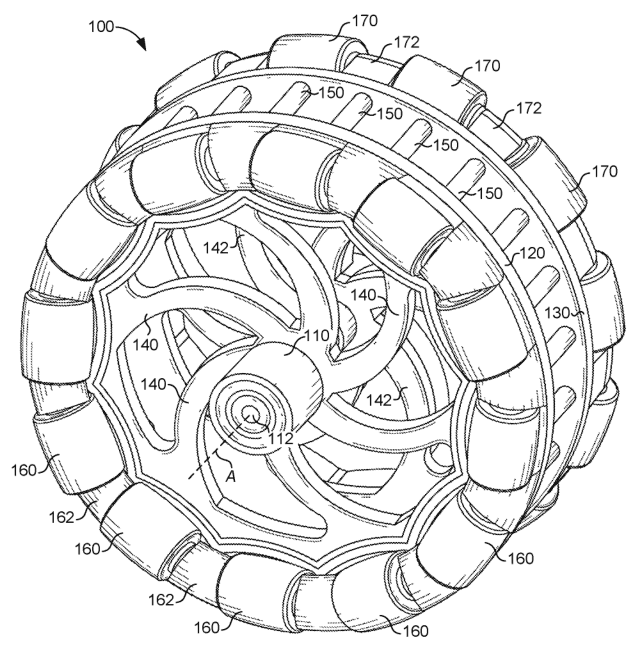
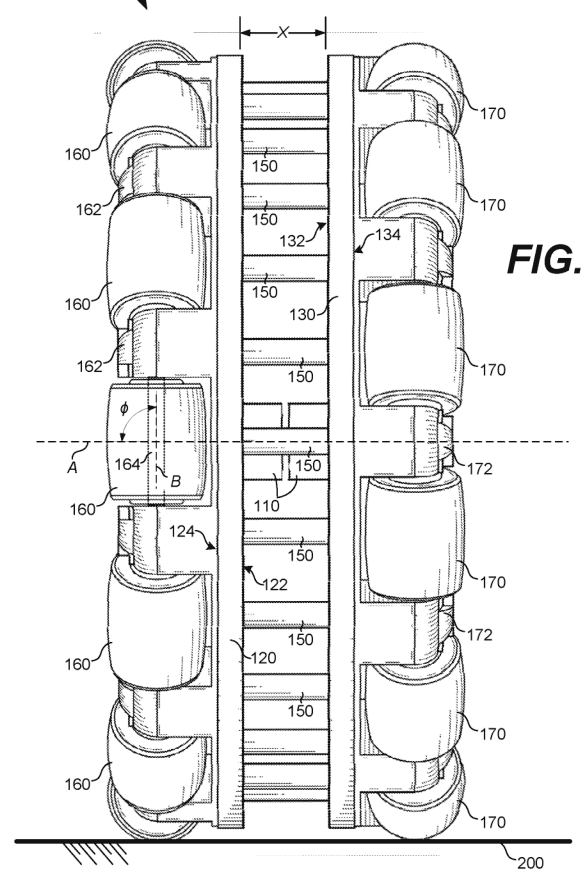
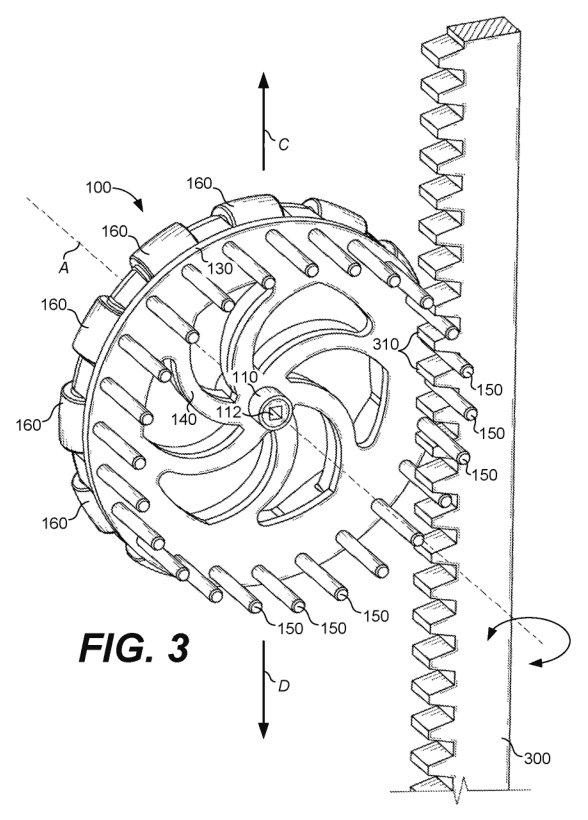
A wheel formed from two concentric rims with an annular ring of rollers mounted on one rim so rollers provide an axis of freedom that allows lateral (sideways) motion in addition to normal rolling. The pinion ring of rollers can engage teeth on vertical or angled racks to produce vertical displacement of a vehicle or platform; intended users include robotics and automated material-handling equipment designers. The patent lapsed; description and drawings show multiple rim/roller layouts and rack/track geometries for engagement with toothed racks or sprockets.
(57) What the patent covered
This write-up was generated by AI from the patent's text and may contain mistakes, so check it against the original patent before relying on it.
The main independent claim required a wheel with first and second rims spaced apart axially, an annular ring of multiple rollers arranged in a ring and affixed to the outer surface of one rim, and an axle positioned relative to that rim; a dependent independent claim added a sprocket extending axially between the rims. The claim thus requires: two spaced rims, an annular roller ring affixed to one rim, and specific axial relationships among rims, axle and optionally a sprocket.
Distinguishing feature: The wheel combined an annular ring of free-rotating rollers on one rim with toothed engagement capability so a single wheel can provide lateral translation and toothed engagement for vertical displacement.
Novelty 4/5. At filing, omnidirectional roller wheels (e.g. omniwheels and Mecanum variants) were common for lateral motion, but this design added a pinion-like toothed interface and rim/sprocket arrangement to engage vertical racks for lift, which was a new approach to combining sideways mobility with rack engagement.
Manufacturing
Stamped or machined steel rims, injection-molded or machined rollers with press-fit or threaded axle/bearing inserts, assembly of roller ring onto rim, optional heat treatment or coating of sprocket teeth, final assembly with axle and bearings.
Materials: Steel or stamped steel rims, nylon or hardened plastic rollers, bearing assemblies (steel balls/races), rubber or polyurethane roller tread (likely).
Manufacturability 4/5. Requires several stamped/machined rims and multiple roller subassemblies plus bearings; tooling for rims and rollers and careful assembly of roller ring but no custom electronics or motors in the wheel itself.
Market demand
No demand check has been run for this patent. Likely search terms: omni pinion wheel, omnidirectional roller wheel with teeth, lateral motion rack-engaging wheel. The links in the sidebar open these searches.
Buyers: Warehouse robotics designers, AMR/AGV manufacturers, automation integrators.
Before manufacturing
No related continuation or divisional patents in force were found. Design patents, trademarks and unrelated patents may still cover the product.
Practical risks include need for precise alignment and durable teeth engagement (wear), potential crowded IP space for omnidirectional wheels, and requirement for matched rack/track geometry and installation tolerances.
About 1.5% of lapsed patents are later revived by their owners. This page is a research lead, not legal advice. Obtain a freedom-to-operate opinion before manufacturing.