Patient-matched femoral cutting guide that references trochlear groove and condyles
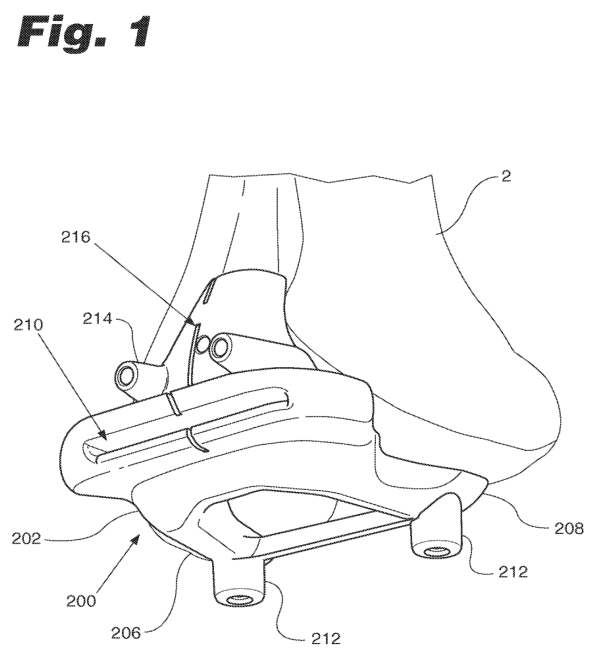
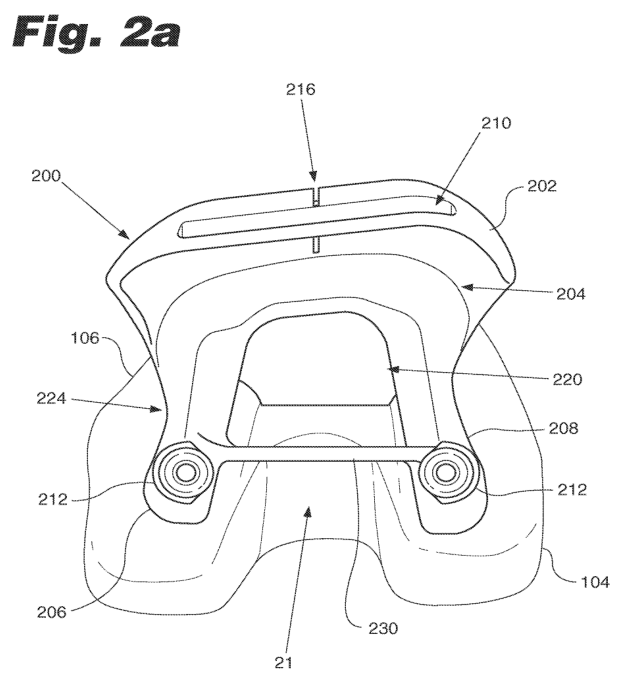
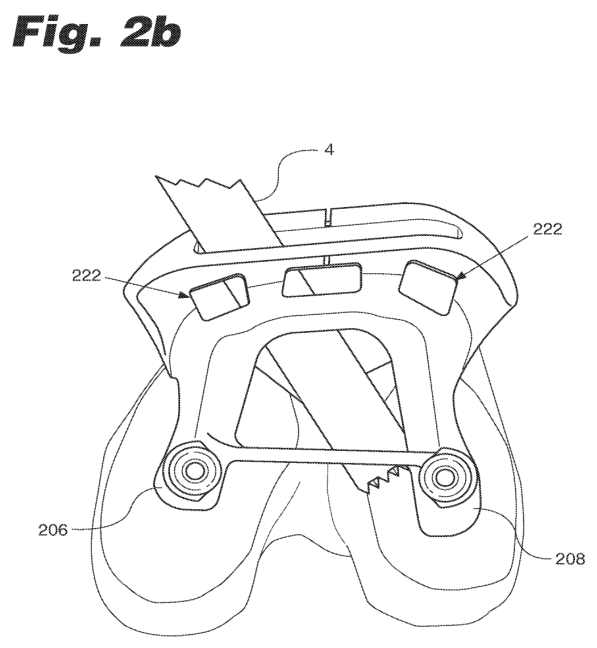
A single-use surgical cutting guide shaped to mate with a patient′s distal femur. The guide has a body with a cutting slot and a patient-matched surface that seats in the patient′s trochlear groove, plus two leg portions with pads that contact the distal faces of the medial and lateral femoral condyles to establish orientation for a cutting tool; intended users are orthopedic surgeons performing knee arthroplasty. The device is configured to locate a cutting slot relative to the femur by simultaneous seating in the trochlear groove and tangential contact at the two condylar pads.
(57) What the patent covered
This write-up was generated by AI from the patent's text and may contain mistakes, so check it against the original patent before relying on it.
The main independent claim covered a patient-matched femoral instrument having: (a) a body with a cutting slot and a patient-matched surface sized and shaped to mate with the patient′s trochlear groove; (b) a first leg extending from the body with a contacting pad that tangentially contacts the distal portion of the medial femoral condyle; and (c) a second leg extending from the body with a contacting pad that tangentially contacts the distal portion of the lateral femoral condyle; the combination of the trochlear-facing surface and the two condylar contacting pads locates the cutting slot on the femur.
Distinguishing feature: Using a trochlear-groove-matching surface plus two small tangential condylar pads as discrete reference contacts to define the cutting-slot position, rather than a large continuous negative of distal femoral articular surfaces.
Novelty 3/5. At filing, patient-matched guides that reproduced large continuous negatives of distal femoral surfaces were common; this patent focused on a reduced-contact registration using trochlear and discrete condylar pads as an alternative approach.
Manufacturing
Patient-specific CAD derived from CT/MRI segmentation; guide manufactured by selective laser sintering (SLS) or stereolithography for polymer single-use guides, or CNC-machined or EDM-cut metallic prototype; post-processing and sterilization before packaging.
Materials: Surgical-grade stainless steel (likely), Medical-grade polymer for single-use guides (e.g., nylon PA12 or polyether ketone), Biocompatible cushioning or polymeric pads (possible).
Manufacturability 4/5. Manufacture requires 3D image processing and low-volume additive manufacturing or small-run CNC for accurate patient-matched geometry, with several printed/machined parts and hand/sterile packaging assembly.
Market demand
No demand check has been run for this patent. Likely search terms: patient specific knee cutting guide, femoral trochlear matched guide, patient matched orthopedic cutting block. The links in the sidebar open these searches.
Buyers: Orthopedic surgical departments and hospitals performing total knee arthroplasty.
Before manufacturing
No related continuation or divisional patents in force were found. Design patents, trademarks and unrelated patents may still cover the product.
Device registration and sterilization requirements and incumbent market of patient-matched and conventional cutting guides present regulatory and commercial risks; patent has lapsed so freedom-to-operate should be assessed but this note is not legal advice.
About 1.5% of lapsed patents are later revived by their owners. This page is a research lead, not legal advice. Obtain a freedom-to-operate opinion before manufacturing.