Filter that intercepts and gates auto-play recommendations
A system intercepts recommendations that a recommender has already sent toward a consumption device, evaluates them against configured auto-consumption rules and device/context inputs, and then allows, blocks or constrains automatic consumption. Typical users are platforms that mediate recommendations and end devices (media players, set‑top boxes, smart speakers, IoT displays) and administrators who set auto-consume policies.
(57) What the patent covered
This write-up was generated by AI from the patent's text and may contain mistakes, so check it against the original patent before relying on it.
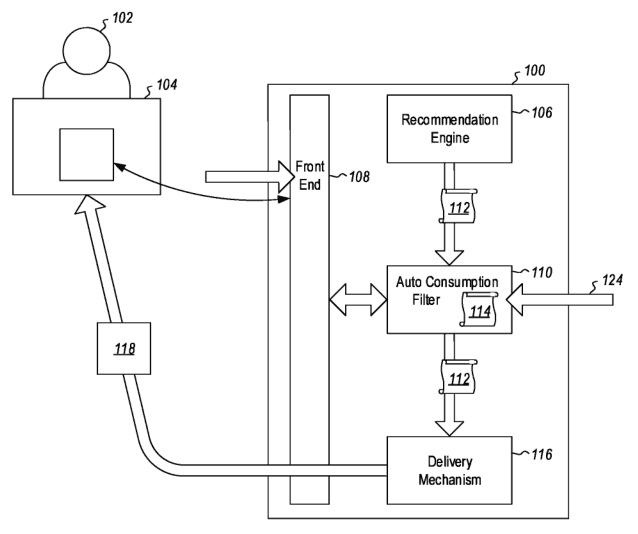
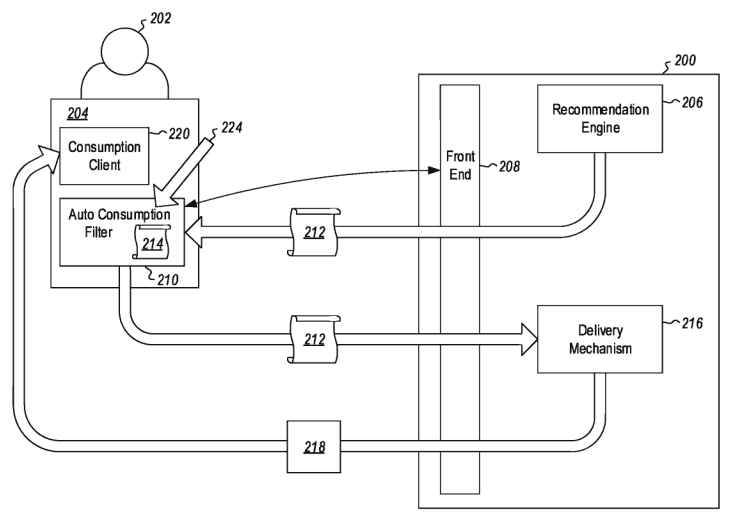
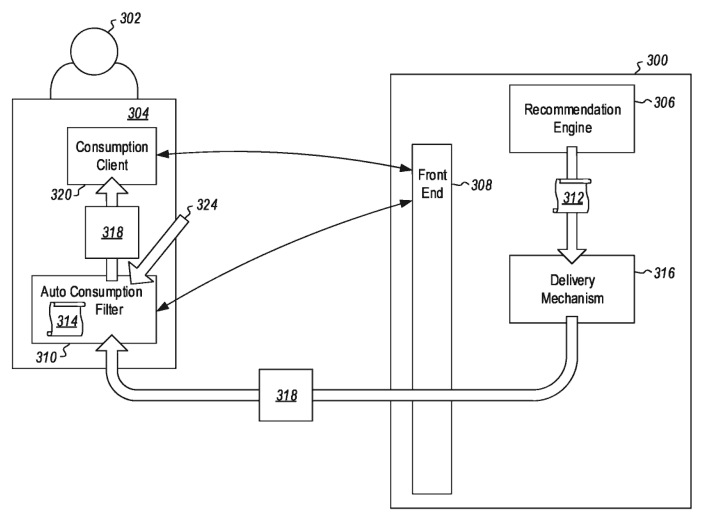
The main independent claim covers intercepting a recommendation already en route from a recommendation system to a consumption device, identifying auto‑consumption rules (including at least one rule about computing‑resource use), receiving context inputs about device status or asset attributes, and based on analysis of rules and inputs, delivering the asset to the device for automatic consumption (or applying constraints).
Distinguishing feature: Interception of an already en route recommendation and applying local auto‑consumption filter rules that consider device physical status and resource usage before allowing automatic consumption.
Novelty 3/5. Recommenders and client‑side playback controls were common when filed; the distinguishing part was a midstream interceptor that applies configurable auto‑consume rules based on device context and resource constraints.
Implementation
Implement a network or application‑level interceptor (proxy or middleware) that subscribes to recommendation messages, fetches or receives device context via a lightweight agent or existing telemetry API, evaluates rules in a rules engine (JSON/YAML policies) including resource‑use thresholds, and then forwards, modifies or blocks the recommendation and signals constraints to the consumption device via existing delivery APIs.
Components: Interception proxy or message bus hook, rules engine with policy definitions, context collector (device status, asset metadata), delivery controller that enforces constraints.
Buildability 5/5. Main effort is integrating with recommendation message paths and obtaining reliable device context; otherwise a small engineering team can build it in weeks with standard components.
Market demand
Comparable products exist; none doing exactly this was found. Well-established browser extensions with large user bases; focus on blocking autoplay content and trackers rather than platform-side recommender approvals; open-source and vendor-supported projects exist with ongoing development.
- AdGuard — Browser extension (ad and content blocking) · AdGuardunknown
- uBlock Origin — Efficient content blocker · Raymond Hill (open-source)unknown
- Privacy Badger — Blocking tracking and some auto-playing content · Electronic Frontier Foundation (EFF)unknown
Demand check by web search, week of Oct 12, 2026. Listings change frequently.
Buyers: Media platforms, smart‑home device managers, OTT services.
Before manufacturing
No related continuation or divisional patents in force were found. Design patents, trademarks and unrelated patents may still cover the product.
Practical risks include integration with various recommendation delivery channels, ensuring timely context updates, and privacy or compliance constraints when collecting device status.
About 1.5% of lapsed patents are later revived by their owners. This page is a research lead, not legal advice. Obtain a freedom-to-operate opinion before manufacturing.