Server-issued temporary contact tokens that forward then expire
A system generates temporary contact identifiers (tokens) that do not include the user’s real contact (phone, email) and that, when used by a recipient, cause communications to be routed to the real contact. The server attaches termination controls (time range, event-driven revocation, remote erase from recipient device) so the temporary identifier ceases to function after an event; intended users are people who want to share contact briefly with a stranger or service.
(57) What the patent covered
This write-up was generated by AI from the patent's text and may contain mistakes, so check it against the original patent before relying on it.
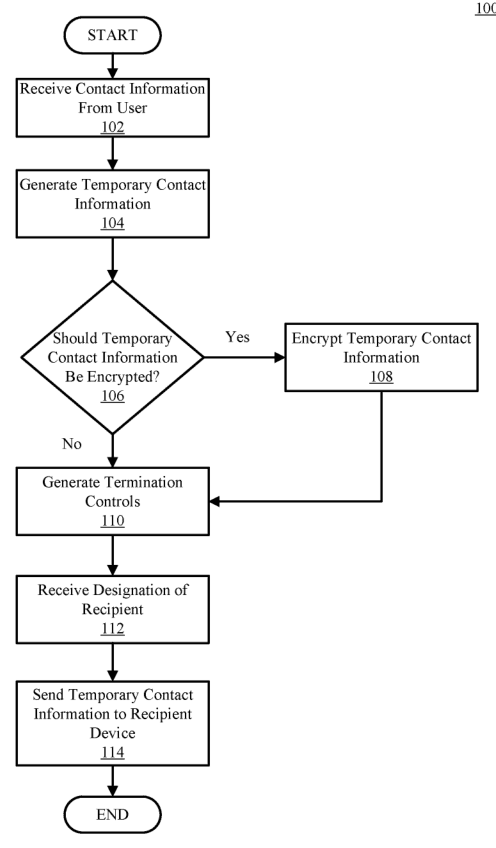
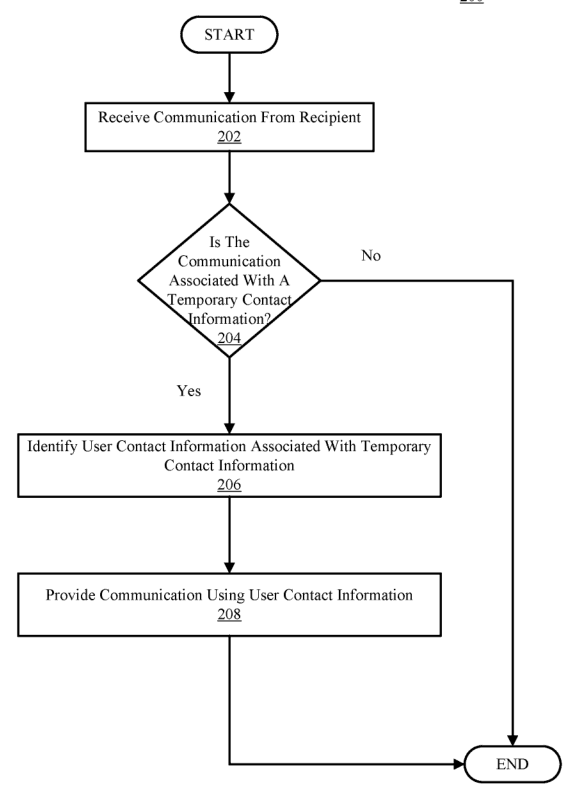
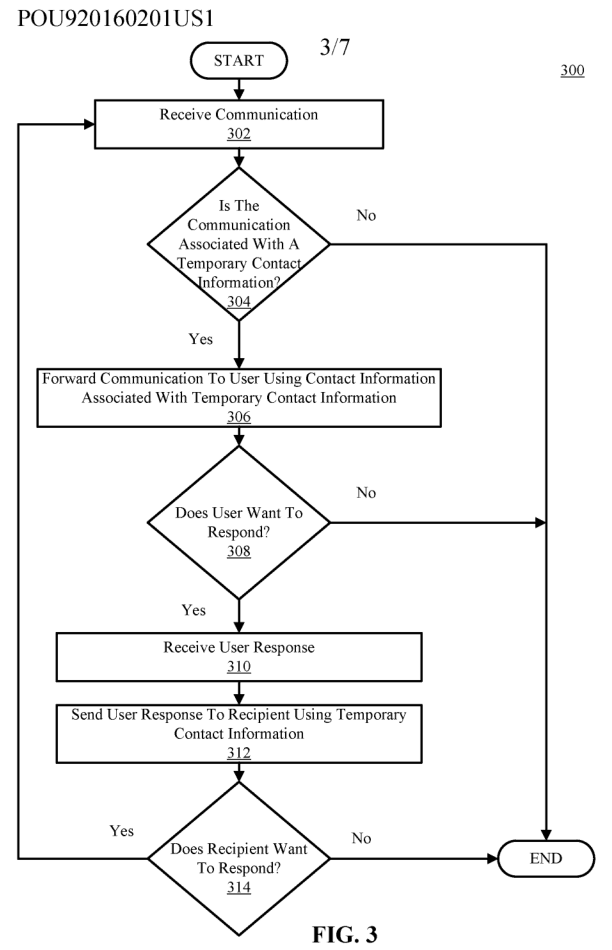
The independent claim covers identifying a user’s real contact information; generating temporary contact information that omits the real contact but causes messages to be forwarded to the real contact when used by a recipient; and generating termination controls tied to that temporary contact which prevent its use after an event, including remotely erasing the temporary contact from the recipient’s device via a server.
Distinguishing feature: Combining a transient forwarding token with server-controlled termination that can remotely erase the token from the recipient device and event-driven disabling.
Novelty 3/5. Temporary forwarding addresses and disposable phone/email services existed; the patent emphasized server-side remote erase and explicit event-based termination controls as an added mechanism.
Implementation
A small team would run a cloud service that mints cryptographically random tokens (URLs, email aliases, short numbers) mapped to real contact endpoints, implement forwarding via standard SMTP/HTTP/SIP/SMPP gateways, store token metadata including expiry and event hooks in a database, and expose an API/dashboard to create tokens and trigger revocation; optionally ship a minimal client (mobile app or web link handler) that stores the token and accepts remote delete commands via a push channel or polling.
Components: Server-side token generation and routing service, database of token → real-contact mappings and metadata, API/SMTP/SMPP gateway or push/VoIP gateway to forward messages/calls, client-side lightweight agent or app code to receive and store temporary contact entries.
Buildability 5/5. Main work is integration with messaging/call gateways, secure token lifecycle management and push/remote-delete for client apps; no custom hardware required.
Market demand
Comparable products exist; none doing exactly this was found. There are multiple disposable forwarding alias services with real-time forwarding and on/off controls; several offer free tiers alongside paid Premium plans; some emphasize privacy by design and alias management rather than pure ephemeral tokens; competition includes both consumer-facing email alias services and privacy-focused forwarding tools.
- Tailmailer · Tailmailer, Inc.premium $15/month; free plan available
- Shitmail.org · Shitmail.org teamfree; paid options not clearly listed
- Emcognito · Emcognito (wm.emcognito.com)free tier; Plus/Pro plans available (pricing not listed on site)
Demand check by web search, week of Oct 12, 2026. Listings change frequently.
Buyers: Consumers and small businesses needing disposable contacts.
Before manufacturing
No related continuation or divisional patents in force were found. Design patents, trademarks and unrelated patents may still cover the product.
Practical risks: crowded market with existing services, delivery/anti-spam filtering for forwarded messages, client remote-erase requires user installation or platform push channels, and privacy/regulatory compliance for intercepting/forwarding communications.
About 1.5% of lapsed patents are later revived by their owners. This page is a research lead, not legal advice. Obtain a freedom-to-operate opinion before manufacturing.