Diamond abrasive nonwoven floor maintenance pad
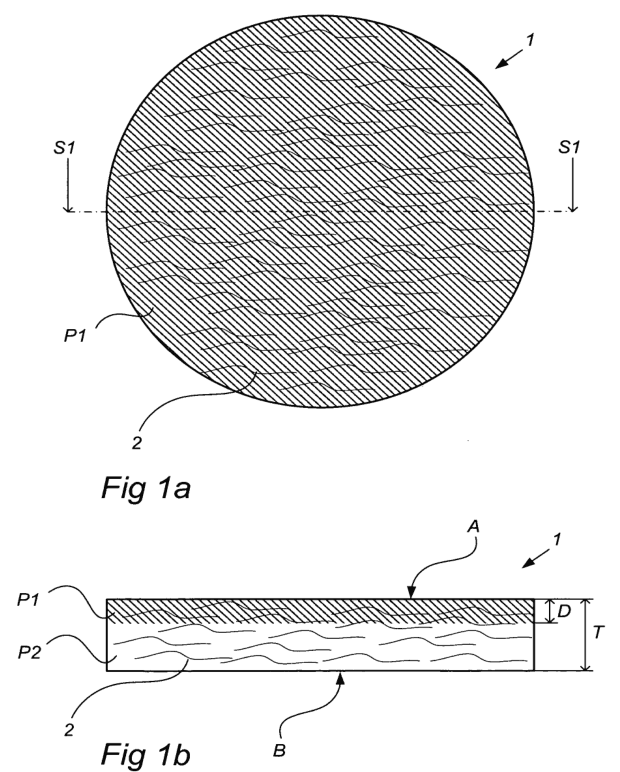
A flexible, open lofty three-dimensional nonwoven pad with 3–6 μm diamond particles bonded on its contact surface and dispersed within the pad, used on rotating floor machines to maintain gloss on uncoated stone surfaces (marble, terrazzo, polished concrete) by applying pressure and relative motion. The method specifies use without an effective amount of crystallization agent and repeating the treating as a daily maintenance routine. Typical users are janitorial contractors and facility maintenance teams for stone floors.
(57) What the patent covered
This write-up was generated by AI from the patent's text and may contain mistakes, so check it against the original patent before relying on it.
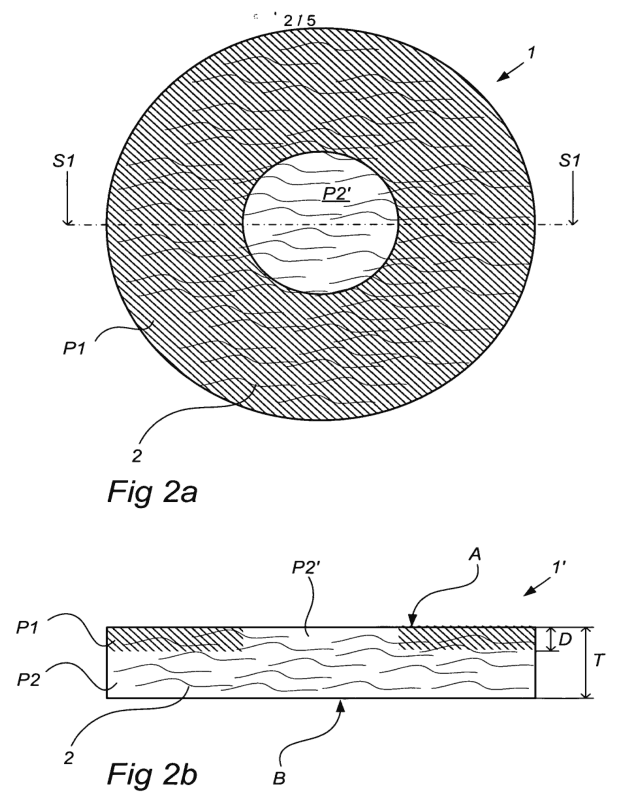
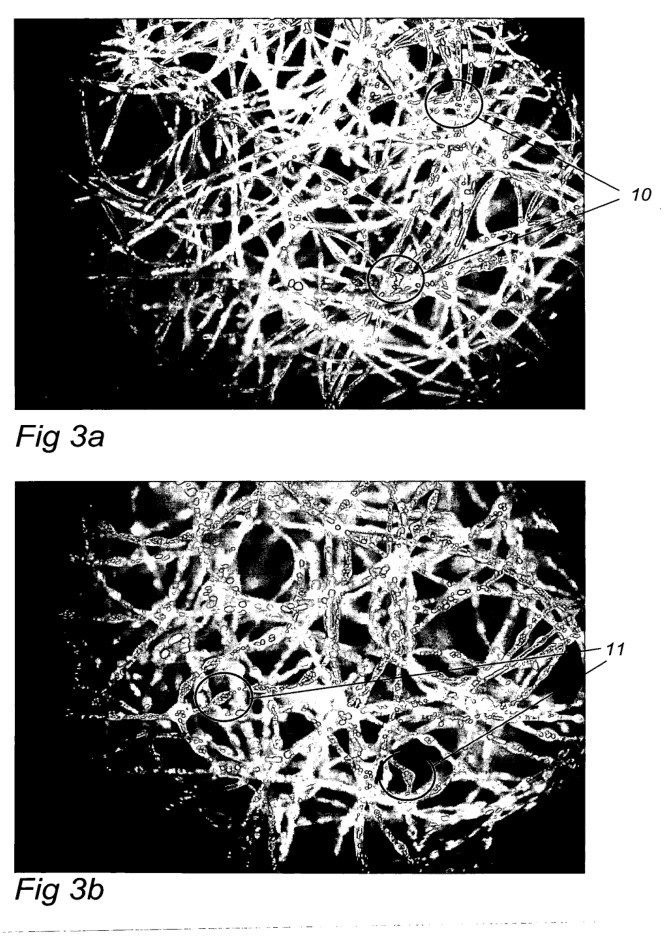
The main independent claim covered a maintenance method that uses a flexible open lofty three-dimensional nonwoven fiber pad having diamond particles (average diameter 3–6 μm) bonded to the contact surface and dispersed in the pad, applied with pressure and relative motion to an uncoated stone surface (marble, terrazzo, polished concrete) without an effective amount of crystallization agent, repeated regularly to keep gloss at or above the initial value.
Distinguishing feature: Embedding and bonding very fine (3–6 μm) diamond particles into an open lofty nonwoven maintenance pad and specifying operation without crystallization agents for daily gloss maintenance.
Novelty 3/5. Nonwoven maintenance pads and rotating floor machines were common; the patent adds bonded micro-diamond abrasives and an explicit no-crystallization-agent daily maintenance regime, which is a focused improvement rather than a wholly new product class.
Manufacturing
Produce an open three-dimensional nonwoven web (melt-bonded or resin-impregnated), impregnate or coat with a binder-abrasive mixture to bond 3–6 μm diamond particles to the pad surface and within the web (e.g. squeeze-roll application and cure/dry), cut to circular discs, and mount on a rotatable carrier plate for machine use.
Materials: Polyamide or polyester fibers (e.g. PET), diamond abrasive particles (3–6 μm), primary binder resin (polymer), optional secondary binders or curing agents.
Manufacturability 4/5. Manufacturing requires standard nonwoven web production and a binder/abrasive application step (squeeze-roll or coating) plus curing and die-cutting; tooling is conventional and assembly is low-complexity.
Market demand
This design, or something very close to it, is on sale now. Typical retail price: $64–$425. multiple active vendors offering diamond nonwoven pads; pads available in multiple sizes; several listings show both daily maintenance and polishing capabilities.
- 3M Diamond Buffing Pad - 20" · ULINE$425 per case
- Twister Hybrid Star Pad (2 Pack) · Runyon Surface Prep$64.18 – $99.19
- Scotch-Brite Purple Diamond Floor Pad Plus · Veritiv (Scotch-Brite)
Demand check by web search, week of Oct 12, 2026. Listings change frequently.
Buyers: Janitorial contractors and facility maintenance staff for stone floors.
Sourcing
Factories list this type of product on supplier marketplaces, at about $0.60–$13.80 per unit with a typical minimum order of 100 units. Factory cost is roughly 0–22% of the typical retail price, before shipping, duties and marketplace fees. Listed products are diamond floor polishing pads and related nonwoven/dry-wet pads from Chinese manufacturers; some entries show price tiers and MOQs typical for OEM/ODM diamond tool pads. Availability and exact specs may vary by SKU; contact suppliers for exact grit, backing material, and compatibility with your equipment.
- Corediam Tools Co., Ltd. · corediam.en.made-in-china.com · MOQ 100 PiecesUS$1.00-3.00
- Wuhan Wanbang Laser Diamond Tools Co., Ltd. · wanbanglaser.en.made-in-china.com · MOQ 24 PiecesYour Price shown after logincurrently US$9.00-13.80
- Zhe Cheng Xinrui Diamond Tools Co., Ltd. · xrdiamond.en.made-in-china.com · MOQ 100 PieceUS$0.60-1.20
Supplier prices are from public listings found by web search, quoted before customization, shipping and duties. Use them to decide whether to request a quotation.
Before manufacturing
No related continuation or divisional patents in force were found. Design patents, trademarks and unrelated patents may still cover the product.
Practical risks include diamond powder cost, consistency of particle bonding, and the patent’s scope limited to 3–6 μm diamonds and use without crystallization agent; regulatory or safety guidance for airborne fine abrasives may apply.
About 1.5% of lapsed patents are later revived by their owners. This page is a research lead, not legal advice. Obtain a freedom-to-operate opinion before manufacturing.