Flat two-plate head-and-neck phantom with replaceable tooth simulants
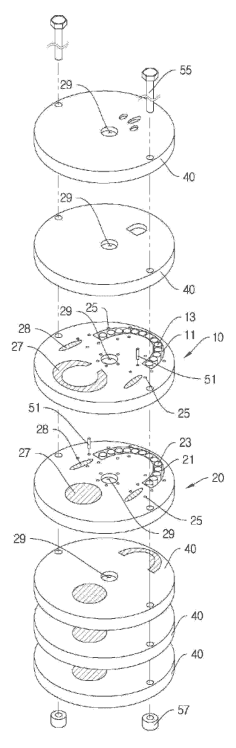
A flat, slab-style head and neck phantom composed of two mating plates with matching insertion grooves that accept multiple cylindrical tooth simulants. The device supports optional dosimeter placement along groove edges and allows selective insertion/removal of tooth or implant simulants to reproduce CT artifacts and measure radiation dose for head/neck treatment planning. Intended users are clinical medical physicists and radiotherapy departments.
(57) What the patent covered
This write-up was generated by AI from the patent's text and may contain mistakes, so check it against the original patent before relying on it.
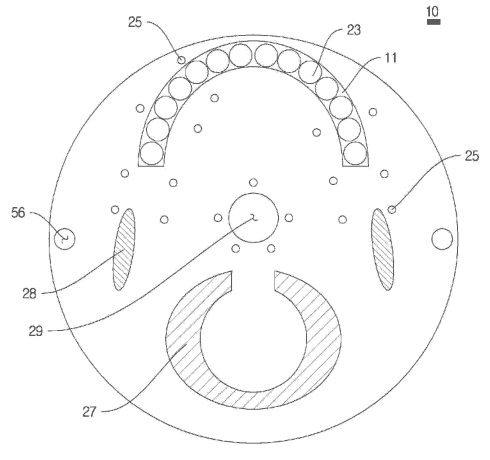
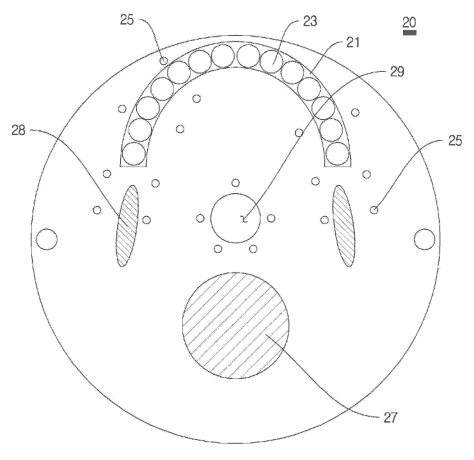
The independent claim covered a phantom formed by a flat first plate with an insertion groove on one surface, a flat second plate contacting the opposite surface with a corresponding insertion groove, and multiple teeth simulants inserted into those grooves; each teeth simulant is a cylindrical case containing an accommodated material. A dependent independent claim required dosimeter insertion grooves along the outer edges of the tooth grooves that penetrate the contacted surface to accept dosimeters for radiation measurement.
Distinguishing feature: Replaceable cylindrical tooth simulants housed in matching grooves in two flat plates, plus edge dosimeter channels that penetrate between the plates for dose measurement.
Novelty 3/5. Simulated phantoms and replaceable tooth blocks were already common for CT/radiation QA; the specific combination of two flat mating plates with cylindrical-case tooth simulants and integrated dosimeter channels was a localized improvement on familiar head/neck slab phantoms.
Manufacturing
Injection-molded or CNC-cut plastic plates with machined or molded insertion grooves; injection-molded cylindrical cases filled with chosen simulant materials; manual assembly by inserting simulants and closing plates; optional adhesive or fasteners for plate mating.
Materials: Rigid plastic plates (likely ABS or PMMA), Cylindrical cases (plastic, e.g. PET or PP), Tooth simulant fill (ceramic, resin, or metal insert depending on artifact simulation), Foam or tissue-equivalent polymer for surrounding soft-tissue simulation.
Manufacturability 4/5. Parts are a few molded or machined plastic plates and multiple simple cylindrical inserts; assembly is manual and tooling is standard for molded parts and simple machining for grooves.
Market demand
Comparable products are on sale; this exact design was not found. Widely marketed for radiotherapy QA with head inserts and exchangeable/dose-detection capabilities; multiple inserts and configurations are documented by the manufacturer.
- Comprehensive Electron Density Phantom · PTW Freiburg / PTW USA
- RUBY Modular QA Phantoms · PTW
Demand check by web search, week of Oct 12, 2026. Listings change frequently.
Buyers: Medical physics departments and radiotherapy clinics.
Sourcing
Factories list related products that could be adapted, at about $16.80–$116.00 per unit with a typical minimum order of 1 unit. These listings show dental phantom heads with replaceable teeth for training; they are not CT-dosimetry specific but could be adapted or OEM’d for custom tooth simulants and artifacts if a supplier offers that customization.
- Foshan Jingle Medical Equipment Co., Ltd. · Alibaba.com · MOQ 1US$116 (1–19 sets)US$106 (20+bulk) per set
- Foshan Mingchuan Technology Co., Ltd. · Alibaba.com · MOQ 1Not listedprice shown upon inquiry
Supplier prices are from public listings found by web search, quoted before customization, shipping and duties. Use them to decide whether to request a quotation.
Before manufacturing
No related continuation or divisional patents in force were found. Design patents, trademarks and unrelated patents may still cover the product.
Dosimetry accuracy depends on simulant materials and placement; certification and QA for clinical dosimetry essential; market includes many existing CT/phantom suppliers.
About 1.5% of lapsed patents are later revived by their owners. This page is a research lead, not legal advice. Obtain a freedom-to-operate opinion before manufacturing.