Three-lumen catheter that samples and returns blood while infusing a second fluid
A vascular catheter with at least three separate lumens: one lumen withdraws blood from near the distal tip, a second lumen infuses a second fluid toward a nearby distal opening, and a third lumen returns withdrawn blood to a more distal opening. The distal openings are arranged so that withdrawn blood passing into the return lumen traverses or mixes across the infusion opening; intended users are hospitals and research clinics performing frequent or continuous blood sampling with simultaneous infusion or drug delivery.
(57) What the patent covered
This write-up was generated by AI from the patent's text and may contain mistakes, so check it against the original patent before relying on it.
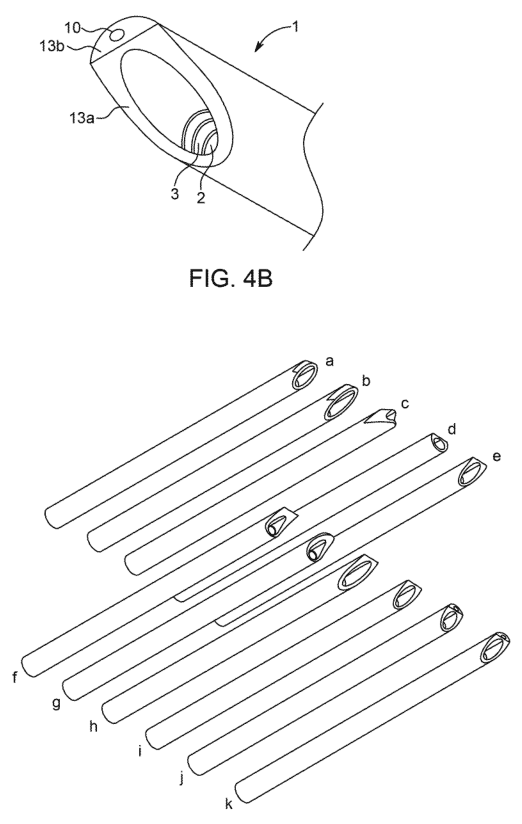
An elongated catheter having (a) a first lumen that draws a first fluid from a first distal opening toward a first proximal opening, (b) a second lumen that delivers a second fluid from a second proximal opening to a second distal opening, and (c) a third lumen that returns the first fluid from a third proximal opening to a third distal opening located closer to the catheter tip than the first distal opening; the first distal opening is disposed alongside the second distal opening so that fluid entering the first distal opening has passed across the second distal opening and thus comprises at least part of the second fluid.
Distinguishing feature: The distal arrangement of three lumens that withdraw, infuse and return fluids with the return opening positioned more distal than the withdrawal opening and the withdrawal opening positioned alongside the infusion opening so withdrawn fluid includes at least part of the infused fluid.
Novelty 3/5. Multi-lumen catheters and infusion/withdrawal arrangements were known, but the specific three-lumen distal-opening spatial relationship to mix infused and withdrawn fluids and to return unused blood was a specific improvement.
Manufacturing
Extruded multi-lumen catheter tubing (co-extrusion or multi-bore extrusion), cut to length, heat-form distal tip and emboss or punch lumen openings, insert or mold proximal hub, add radiopaque marker, final assembly and sterilization.
Materials: Medical-grade polyurethane or silicone catheter shaft, Polyether block amide or polyether urethane for lumen walls, Radiopaque filler (barium sulfate or tungsten) in wall, Thermoplastic elastomer hubs and connectors.
Manufacturability 4/5. Requires multi-bore extrusion tooling and post-extrusion cutting/formation of multiple distal openings plus assembly of a multi-port proximal hub; standard for hospital-grade catheters but needs controlled tooling and sterilization lines.
Market demand
Comparable products are on sale; this exact design was not found. Typical retail price: $85. US-listed triple-lumen CV catheter commonly sold for blood sampling and multi-drug infusion; product page shows Regular price 84.95 USD with active e-commerce listing
- Triple Lumen Catheter Only · Nasco Healthcare84.95 USD
Demand check by web search, week of Oct 12, 2026. Listings change frequently.
Buyers: Hospital intensive care units, clinical research labs, dialysis or monitoring services.
Before manufacturing
No related continuation or divisional patents in force were found. Design patents, trademarks and unrelated patents may still cover the product.
Regulatory and biocompatibility testing, hemocompatibility and thrombosis risk, and crowded market for multi-lumen vascular catheters; patent has lapsed so freedom-to-operate is not a legal opinion.
About 1.5% of lapsed patents are later revived by their owners. This page is a research lead, not legal advice. Obtain a freedom-to-operate opinion before manufacturing.