External beehive monitor with dual-gate bee counter
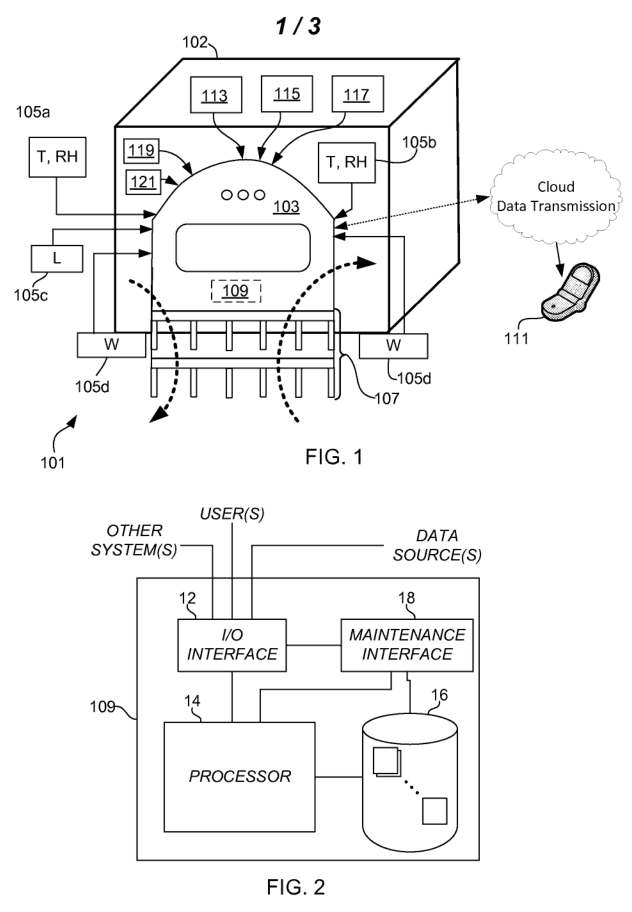
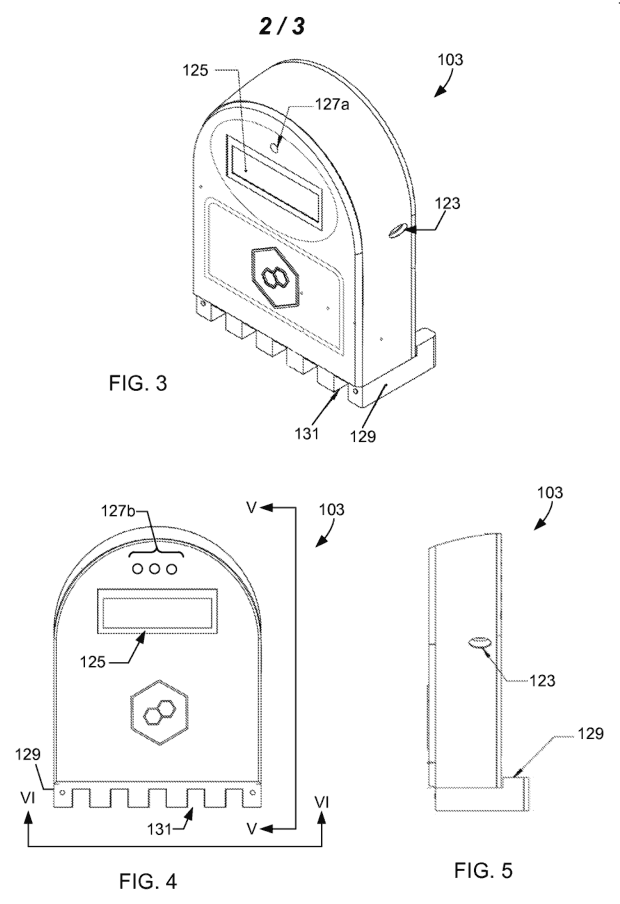
A battery- or mains-powered monitoring device attaches externally to a hive and measures ambient conditions (temperature, humidity, weight, etc.) and bee traffic. Bee traffic is measured by one or more passages in a base with side-by-side gates containing opposing light-interrupter sensors; the order and timing of sensor trips is used to detect direction and count bees. The unit logs data, compares to baseline values, and transmits alerts to a remote device; beekeepers may remotely operate one or more hive functions.
(57) What the patent covered
This write-up was generated by AI from the patent's text and may contain mistakes, so check it against the original patent before relying on it.
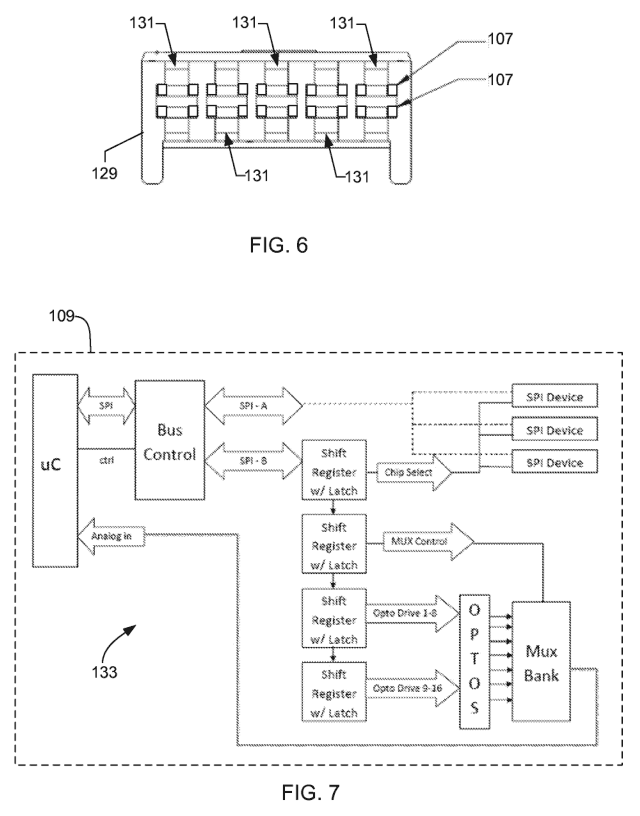
The main independent claim covers an external monitoring device that: has ambient sensors; a base with one or more external bee passages each containing a plurality of side-by-side gates; each gate uses pairs of light-interrupter sensors mounted 180 degrees across the passage; the order and timing of sensor activations in a gate are used to determine individual bee counts and travel direction; and a control system in communication with those sensors records and transmits health/productivity data.
Distinguishing feature: A dual-gate, side-by-side gate array with opposing light-interrupter sensors per gate and use of sensor-trip ordering/timing to infer bee entry versus exit.
Novelty 3/5. Directional counting of bees using time/sequence of paired light interrupters was a practical improvement on single-point counters that only recorded passages without direction, while ambient remote monitoring of hives was already known.
Manufacturing
Injection-molded plastic body for the base/passages, PCB assembly (SMT) with light interrupter sensors mounted through or on the passage walls, wireless module integration, battery or power input wiring, and final hand assembly and sealing.
Materials: Injection-molded plastic (ABS or polypropylene) for base and passages, photointerrupter/light sensors (IR emitter + phototransistor), PCB with microcontroller and wireless module (Wi‑Fi, cellular, or LoRa), sealing gaskets or foam to weatherproof passage openings.
Manufacturability 4/5. Requires several molded parts, PCBs with discrete optical sensors, and moderately precise alignment of sensors in passages; final assembly and calibration are hand or semi-automatic.
Market demand
Comparable products are on sale; this exact design was not found. Existing listings show external/hive-entrance monitoring systems (activity sensors, temperature, humidity, weight) from US vendors; some provide WiFi/cloud integration, but many are older or niche products with limited availability.
- Beehive Monitoring System (Hive Sentry) - Beehive activity sensors... · Maine Biosensors
- SolutionBee HM-6 Hive Monitor With WiFi · PerfectBee434.00
- Beezum eHive BeeCounter · Beezum
Demand check by web search, week of Oct 12, 2026. Listings change frequently.
Buyers: Hobby and commercial beekeepers managing remote or multiple hives.
Before manufacturing
No related continuation or divisional patents in force were found. Design patents, trademarks and unrelated patents may still cover the product.
None obvious; practical risks include sensor fouling from propolis/debris, weatherproofing and power management, and crowded market for hive-monitoring devices.
About 1.5% of lapsed patents are later revived by their owners. This page is a research lead, not legal advice. Obtain a freedom-to-operate opinion before manufacturing.