Rear camera with switchable mirror/monitor for the interior mirror
A rear-facing camera feeds a monitor built into an interior rearview mirror whose front surface is an optical element that either reflects like a conventional mirror or transmits the monitor image. A controller switches the mirror between reflective (mirror) and transmissive (display) modes automatically in response to vehicle signals such as back‑door open/closed or presence/absence of a center rear passenger. Typical users would be automakers or suppliers fitting a mirror-based camera display for backing and passenger-monitoring functions.
(57) What the patent covered
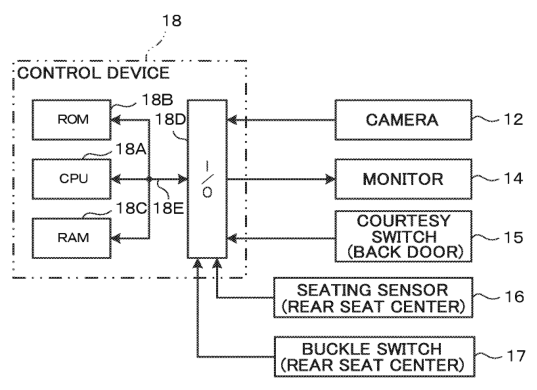
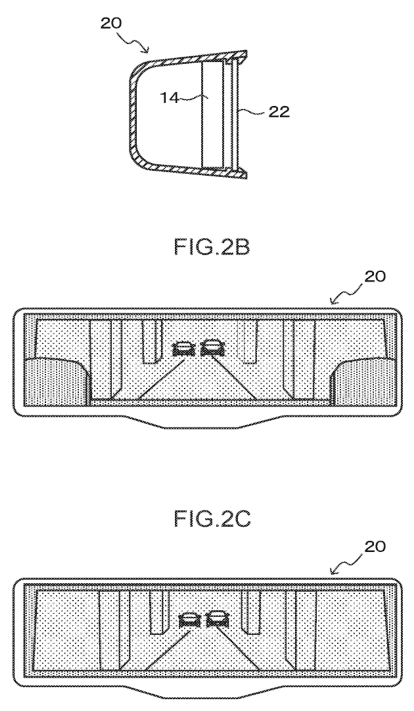
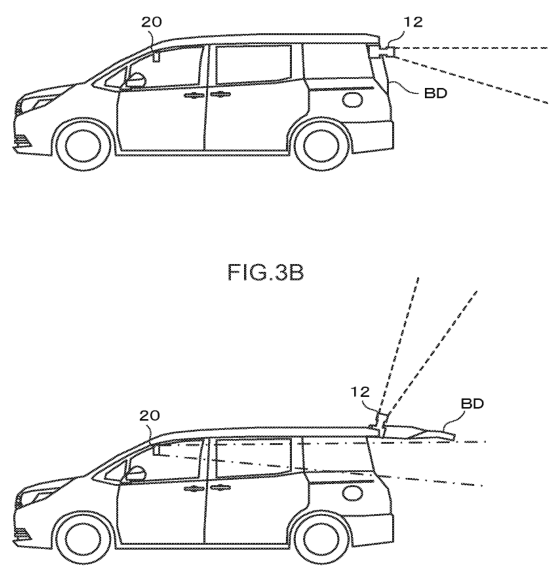
The main independent claim covered a system with: a camera mounted at the vehicle rear that captures rearward images; a monitor that displays those images; an optical mirror placed over the monitor that either transmits the displayed image when the monitor is on or reflects rearward light when the monitor is off; and a controller that switches the monitor/mirror state automatically in response to predetermined vehicle signals (examples given include back‑door open/closed and center‑rear seat occupancy).
The distinctive part: Automatic switching between a transmissive display and a reflective mirror using vehicle signals (back door and center seat occupancy) rather than a manually operated lever.
Novelty 3/5. At filing time rear cameras with display‑integrated mirrors existed, and half‑mirror displays were known; the patent added automatic, signal‑driven switching tied to specific vehicle events rather than manual toggles.
Making it
likely injection‑molded plastic housing, glass mirror substrate with vacuum or sputtered coating, LCD/OLED module assembly, PCB/controller populated by SMT, and final mechanical/electrical assembly and calibration
Materials: glass or laminated glass mirror substrate, coated dielectric films or dichroic/partially reflective coatings, LCD or OLED display panel, plastic or metal housing
Manufacturability 4/5. Several discrete parts (display module, coated mirror/glass, PCB, housing) and standard SMT assembly; requires optical coating or laminated glass supplier and integration into mirror carriage but no exotic fabrication.
Is anyone buying?
This design, or something very close to it, is on sale now. Listings show integrated rear-view mirrors with built-in displays that auto-switch to a connected backup camera when reverse or trigger signals occur; several sellers offer replacement mirrors with displays (BM53FR, OEM-style mirrors) and complete mirror-monitor backup systems.
- Brandmotion Digital Rear View Mirror - LCD Display - 4-5/16"... · etrailer$165.40
- Verity Backup Camera System with 7" Mirror Monitor · Rear Vision Safety (LibRV)
- OEM Auto Dimming Rear-View Mirror w/ 4.3" Wide Screen LCD Monitor · Emerald Integrations
This demand check was run with a web search in the week of Oct 5, 2026. Listings change often, so treat it as a starting point for your own research.
Who buys it: vehicle OEMs and mirror module suppliers
Before you make it
We didn't find any related continuation or divisional patents still in force, although that doesn't rule out design patents, trademarks or unrelated patents covering the same product.
Practical issues: optical coating and display brightness must balance mirror reflectivity and image legibility; integration needs wiring to seat sensors or rear door switches and meet automotive EMC and durability standards. No legal advice intended.
Owners occasionally revive lapsed patents (about 1.5% are), and this page is a research lead rather than legal advice, so get a freedom-to-operate opinion before you manufacture anything.