A foam-filled air mattress with welded cover and dual side chambers
This is a mattress that packs open-cell foam cores inside air-tight bags and uses pumpable air to change firmness. The cover can be bonded or thermally fused to the foam surface, and a lengthwise impermeable divider creates two side-by-side air-filled chambers each with its own valve so the two halves are adjustable independently. Typical buyers are people who want split-firmness full/queen/king mattresses similar to Sleep Number style beds.
(57) What the patent covered
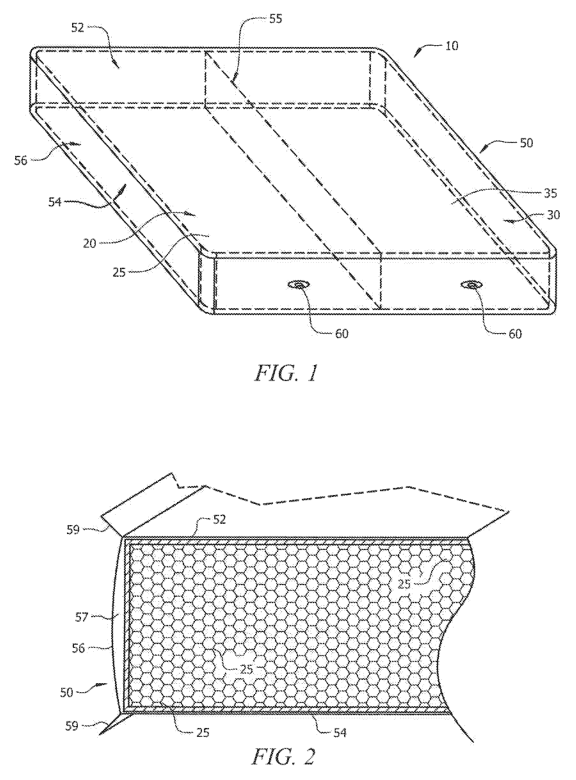
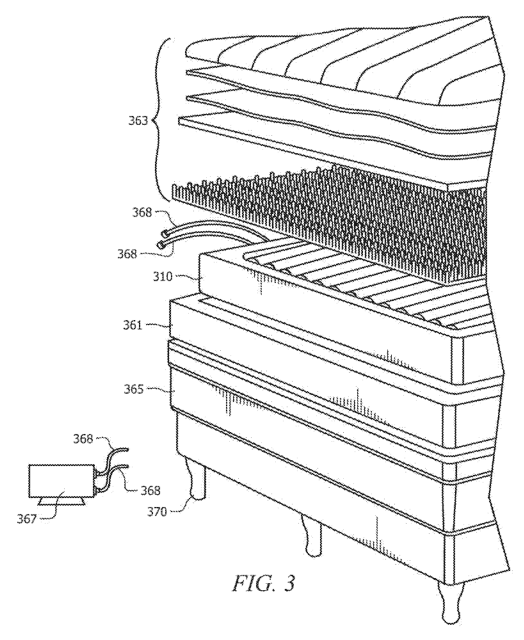
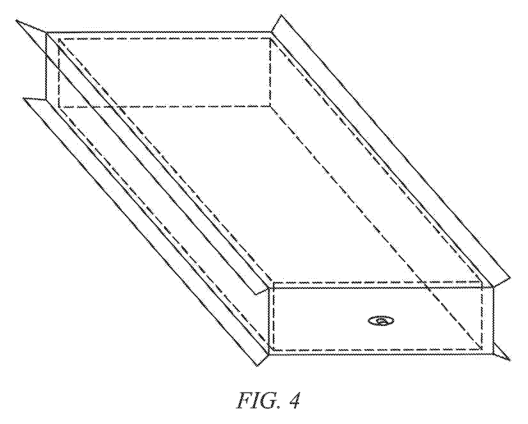
The main independent claim required two identical open-cell foam cores inside a single air-impermeable cover with a lengthwise impermeable divider forming two side-by-side foam-filled air chambers running head-to-foot, each chamber having its own air inlet valve; each foam core has an IFD, each chamber has an adjustable IFD range whose minimum is higher than the IFD the foam would produce by self-inflation (so additional pumped air is required to reach the minimum), and the mattress is sized full, queen, or king. A dependent independent claim also covered a single open-cell foam core enclosed in an impermeable cover where the cover top is fused to the foam surface and the foam alone cannot self-inflate the cover to a minimum mattress IFD.
The distinctive part: Putting open-cell foam inside an air-impermeable cover and welding or bonding the cover to the foam, while making the foam insufficient to self-inflate the chamber so a pump controls firmness.
Novelty 3/5. At filing, adjustable air mattresses and foam mattresses were common; the difference was combining an open-cell foam core bonded to an airtight bag and specifying that pumped air must raise firmness above what the foam self-inflates to, which is a practical hybrid of known concepts.
Making it
Likely fabricated by cutting or molding foam cores, vacuum-sealing or heat-welding thermoplastic film around the cores with a lengthwise welded divider, installing valves, and bonding or heat-fusing the cover top to the foam surface; final assembly and inflation testing done by hand or semi-automated lines.
Materials: open-cell polyurethane foam (standard mattress density), thermoplastic air-impermeable film (PVC, TPU, or laminated PE), valve hardware (plastic bayonet or screw valve), adhesive or heat-welded bonding layer
Manufacturability 4/5. Requires foam cutting, film welding fixtures and valve insertion; moderate part count and some hand or semi-automated assembly but no precision electronics or motors beyond the external pump.
Is anyone buying?
We haven't run a demand check on this one yet. Shoppers would likely search for foam-filled air mattress, adjustable split firm mattress, air chamber foam mattress; the links on the right open those searches.
Who buys it: shoppers wanting split-firmness full/queen/king mattresses
Before you make it
We didn't find any related continuation or divisional patents still in force, although that doesn't rule out design patents, trademarks or unrelated patents covering the same product.
Practical risks include a crowded market with established adjustable-air brands and the need to ensure reliable welds/valves for airtightness; the patent focused on specific features (fused cover to foam and minimum IFD above foam self-inflation), so those narrow elements were central to protection.
Owners occasionally revive lapsed patents (about 1.5% are), and this page is a research lead rather than legal advice, so get a freedom-to-operate opinion before you manufacture anything.