A smoker flame-control insert with paired recirculation flanges
A metal insert for a smoker or grill that creates a combustion cavity with a lower air inlet and an upper inlet flanked by two recirculation channels. When a flame begins, hot convective flow pulls gases into the side channels and across the upper inlet to reduce incoming air and help extinguish the flame, so the unit favors smoldering over flaming; it is aimed at barbecue and smoker makers and backyard cooks.
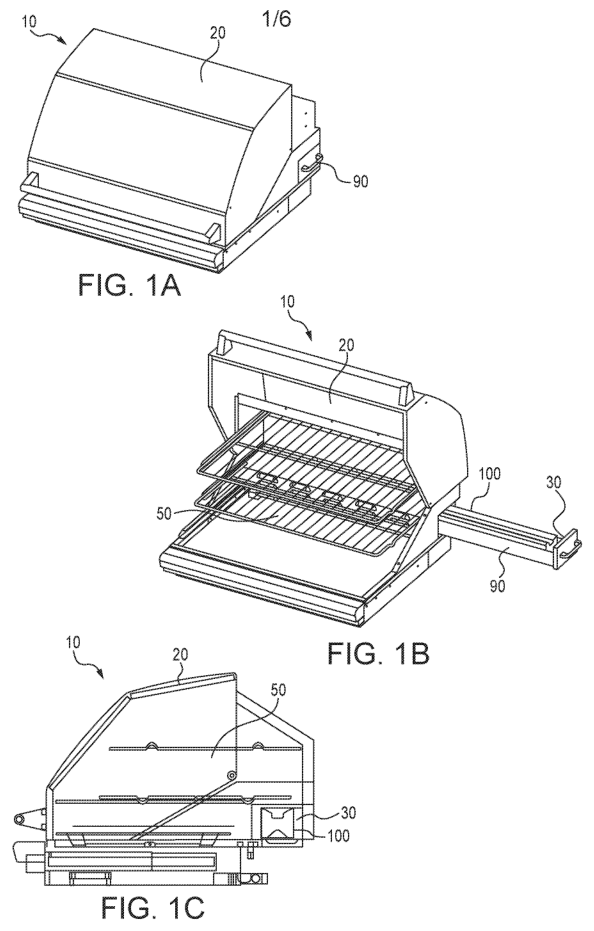
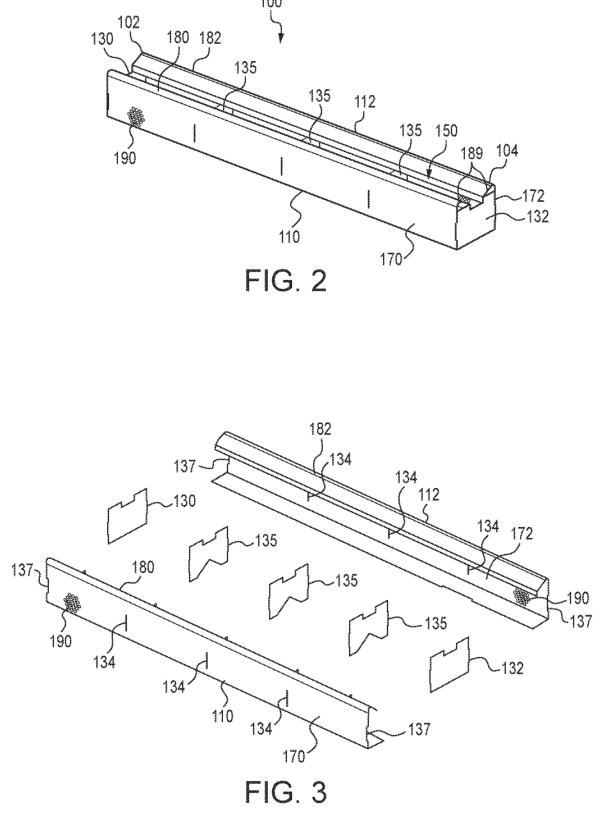
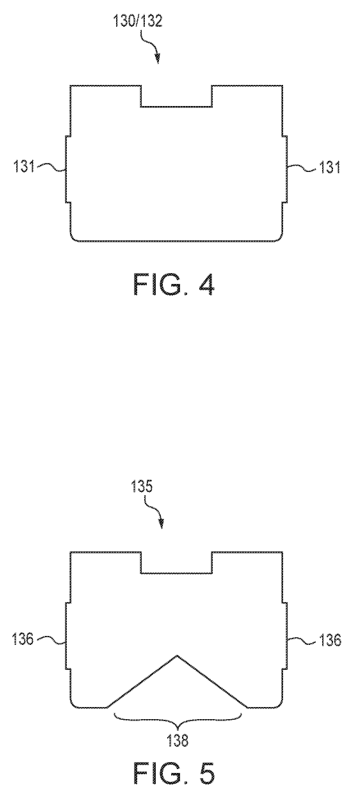
(57) What the patent covered
The main independent claim covered an assembly of two plates (or walls) that form a combustion cavity with a lower inlet to the air source, two flanges that create first and second recirculation channels open to the cavity's top, and an upper inlet defined by the gap between those two flanges placed between the recirculation channels.
Distinguishing feature: Paired flanges form side recirculation channels and an upper inlet between them so convective flow diverts hot gases across the upper inlet to reduce upper air inlet flow when a flame is present.
Novelty 3/5. Smoker inserts and air-control vents were common, but using symmetrical flanged recirculation channels explicitly arranged to use the flame's convection to reduce upper air inlet flow is an improvement on familiar airflow-control features.
Manufacturing
Stamped or laser-cut steel plates formed and bent to create walls and flanges, then spot-welded or fastened together; common for sheet-metal smoker components.
Materials: Stainless steel sheet, mild steel sheet (coated), high-temperature aluminized steel.
Manufacturability 4/5. Several simple stamped and bent parts with spot welding or rivets; tooling is standard for sheet-metal fabrication and assembly is low-tech.
Market demand
Comparable products are on sale; this exact design was not found. Typical retail price: $179–$1149. Two listings show insert/plate style components used to manage airflow and combustion in smoking appliances; one is a dedicated heat-management plate for offset pits, the other a high-end insert/liner for integrated exhaust and recirculation in custom hoods.
- 24-inch Heat Management Plate (Offset) - Durango 24 & Kingman models · Yoder Smokers$179.00 + shipping
- XOIL Pro Insert/Liner (XO Appliance) – 30/36/42/48 inch widths · XO Appliance$1,149
Demand check by web search, week of Oct 5, 2026. Listings change frequently.
Buyers: Backyard smoker and grill manufacturers, barbecue enthusiasts replacing firebox parts.
Sourcing
No factory listings were found on the major supplier marketplaces. Production would likely require custom tooling or a direct approach to a manufacturer. No factories or close-equivalent listings for a smoker flame-control insert with paired recirculation flanges were found on Alibaba.com, Made-in-China.com, Global Sources, or DHgate based on targeted search terms. Related concepts (e.g., general smoker shutters or combustion-channel components) appear in broader grill parts catalogs, but not as the specific insert described here on the listed marketplaces.
Supplier prices are from public listings found by web search, quoted before customization, shipping and duties. Use them to decide whether to request a quotation.
Before manufacturing
No related continuation or divisional patents in force were found. Design patents, trademarks and unrelated patents may still cover the product.
Risks include heat and corrosion resistance requirements for materials and crowded market for aftermarket smoker parts; specification is mainly geometric and could be narrow in scope.
About 1.5% of lapsed patents are later revived by their owners. This page is a research lead, not legal advice. Obtain a freedom-to-operate opinion before manufacturing.