Foam soap pump with a removable restrictor that creates a lost-motion gap
This is a refillable foam dispenser pump and refill unit that uses a flexible connector between the actuator and pistons plus a removable restrictor piece to create an initial ‘no‑travel’ or lost‑motion before the liquid and air pistons move. Users are hand‑operated soap/sanitizer dispenser systems where the restricter is installed as part of the refill to alter stroke engagement and prevent short‑stroking or to control initial actuator travel.
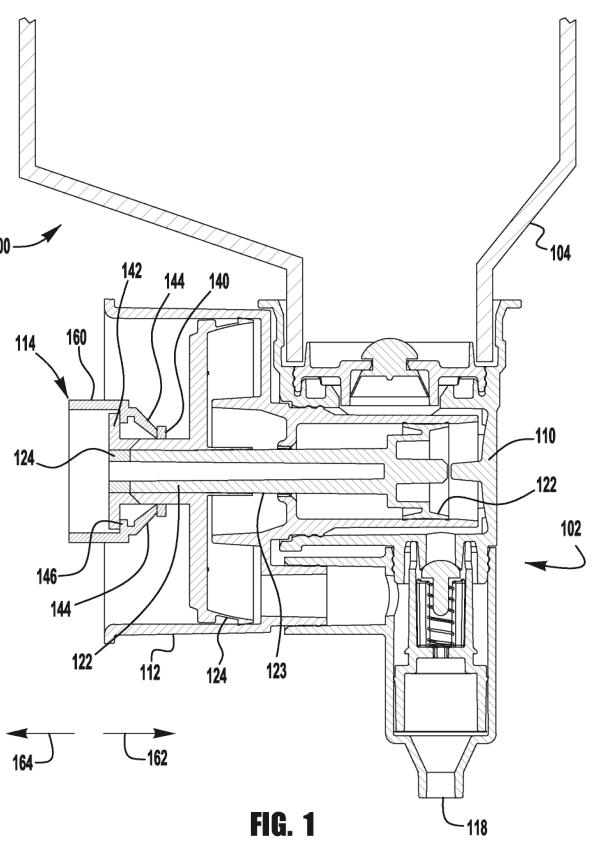
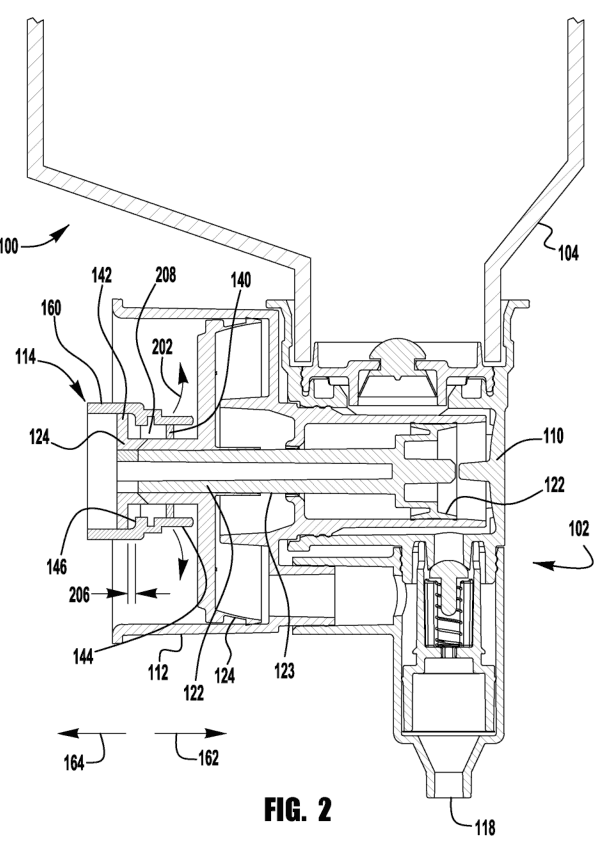
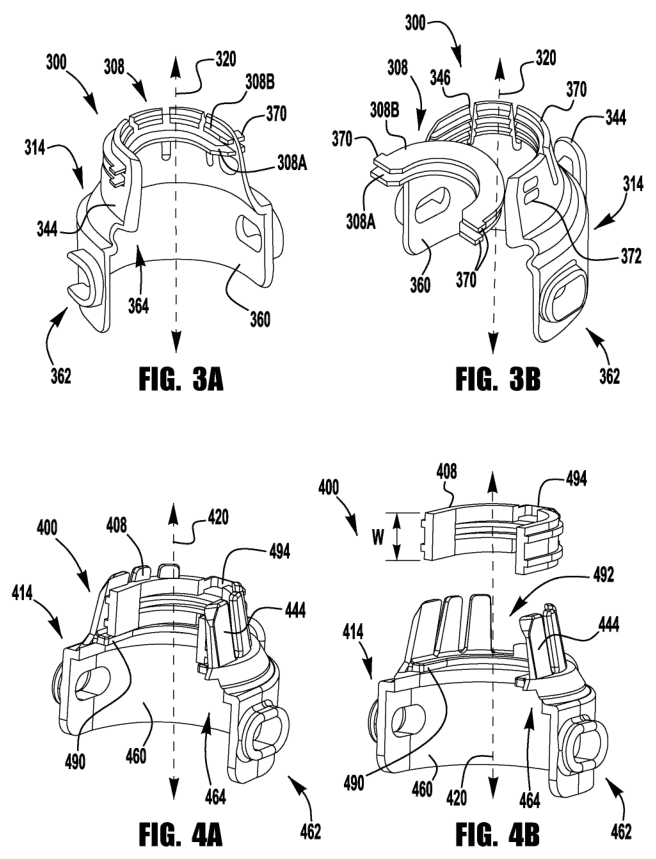
(57) What the patent covered
The main independent claim covers a foam dispenser with a container and pump housing having liquid and/or air chambers and movable pistons, an actuator linked to those pistons by a connector that has a flexible portion and an attachment portion, and a removable restrictor positioned between the connector’s flexible portion and the piston so that initial movement of the connector produces lost motion (connector moves a first distance without moving the piston) and further movement (a second distance) moves the piston with the actuator.
The distinctive part: A removable restrictor placed between a flexible connector and the piston that intentionally produces a two‑stage stroke: first lost motion, then piston engagement.
Novelty 3/5. At filing, foam dispensers with linked liquid and air pistons and flexible connectors were common; the novel part was using a removable restrictor to create a controlled lost‑motion gap built into the refill unit.
Making it
Injection molded plastic parts for the container neck, pump housing, connector and restrictor; elastomer or thin molded flexible connector portion; simple assembly and insertion of restrictor into pump prior to sealing the refill unit.
Materials: HDPE or PET container (likely), PP or ABS injection‑molded pump housing and connector, Elastomer or thin polypropylene flexible connector section, Stamped or molded plastic restrictor (likely)
Manufacturability 4/5. Several small molded parts and one flexible element; parts are standard injection‑mold or elastomer molded components with simple assembly, typical for refill pump manufacture.
Is anyone buying?
We haven't run a demand check on this one yet. Shoppers would likely search for foam soap dispenser refill pump, lost motion foam pump restrictor, hand soap foam pump unit; the links on the right open those searches.
Who buys it: facilities/managers and consumers buying refill soap or sanitizer cartridges
Before you make it
We didn't find any related continuation or divisional patents still in force, although that doesn't rule out design patents, trademarks or unrelated patents covering the same product.
Practical issues include compatibility with existing dispenser actuators and standard refill neck sizes; the claim centers on a specific removable restrictor arrangement so the patent is narrowly focused rather than broad.
Owners occasionally revive lapsed patents (about 1.5% are), and this page is a research lead rather than legal advice, so get a freedom-to-operate opinion before you manufacture anything.